2 Days in Ottawa: A Complete First-Time Itinerary
2 days in Ottawa rarely feel rushed, and that is precisely the city’s strength.
It doesn’t vie for your attention like Toronto does. It doesn’t seem as showy as Montreal can be. Instead, Ottawa reveals itself slowly through its rivers, neighbourhoods, institutions, and everyday rhythm. If you do so calmly and set up your time well, two days are ample to get a sense of how the capital functions.
This itinerary is for first-timers and those who want more than just a checklist. It mixes landmarks with neighbourhoods, iconic stops with local favourites, and movement with breathing room.
If you prioritise geography over urgency, Ottawa makes sense quickly.
Where to Stay Before You Arrive
To keep this itinerary running smoothly and on time, I recommend you stay in or near the downtown core.
Downtown Ottawa, the ByWard Market, and Centretown are perfect. From any of these, you can walk to Parliament Hill, the Rideau Canal, the National Gallery, and most of Day One without having to take transit.
The Glebe and Westboro are great neighbourhoods, but they are a little farther from the centre and require more planning for sightseeing.
If you are weighing a few different areas, read our detailed guide on Where to stay in Ottawa before you book to make sure your base fits your schedule.
For a more in-depth analysis of character, vibe, and trade-offs, visit our full Ottawa neighbourhoods guide before finalising your booking.
Day One: Parliament Hill, the Canal, and Historic Ottawa
On Day One, we are doing orientation. You are going to build a mental map of the city. Everything we are doing today is within walking distance, assuming you are staying centrally.
Morning in the Capital Core
Coffee on Elgin Street
To start the day, head to Elgin Street, which is immediately south of Parliament Hill. Little Victories Coffee Roasters is a great choice for a strong espresso, and the minimalist, local vibe is a nice break from the tourist traps. Another option is the Happy Goat Coffee Co, which is also a great choice.
Overall, Elgin Street provides a good example of how daily life and the city’s government intertwine. Civil servants occupy the streets as they go about their work, and students drift between classes. It feels calm but active.
From here, walk towards Parliament Hill.
Parliament Hill and the Ottawa River
Try to get there before mid-morning to enjoy the space in its open and quiet state.
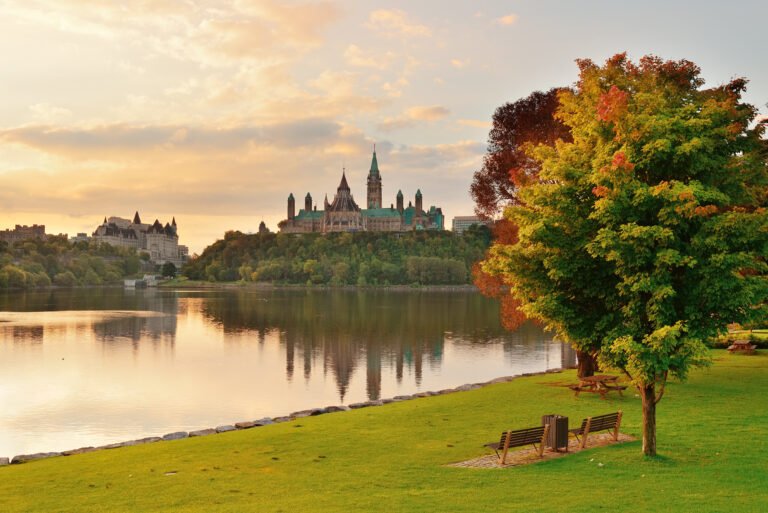
Position yourself by the cenntenial flame and look over the edge to the Ottawa River. You can see Gatineua from there. In this case, the river is a border, not a barrier. The Capital is inextricably linked to its Quebec neighbour.
If you wish to examine Canada’s political sphere, you may book a tour (if available) or walk the grounds. The Gothic Revival style adds detail to the buildings without creating a sense of intimidation.
Be sure to stroll along Wellington Street in the meantime. The Supreme Court of Canada is located west of Parliament Hill, and the surrounding architecture helps define the city of Ottawa.
The River Pathways and Rideau Canal
Walking the Ottawa River
Starting at Parliament Hill, head down toward the river pathways. These wide pedestrian routes exemplify the city’s strengths.
The space is used by joggers, cyclists, and government employees on break, making it feel lived-in rather than curated.
Ottawa’s scale is comfortable, and the skyline looks good from here without feeling dense.
Rideau Canal Locks and Château Laurier
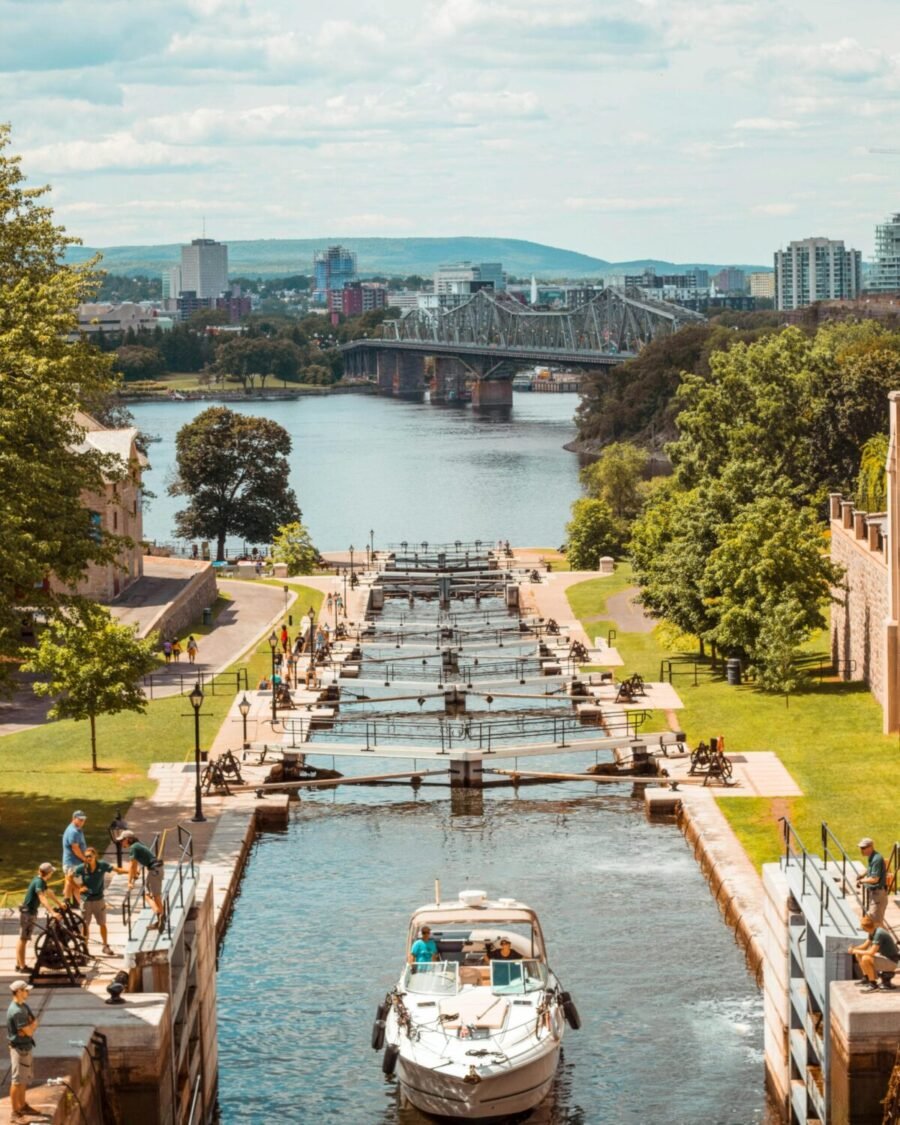
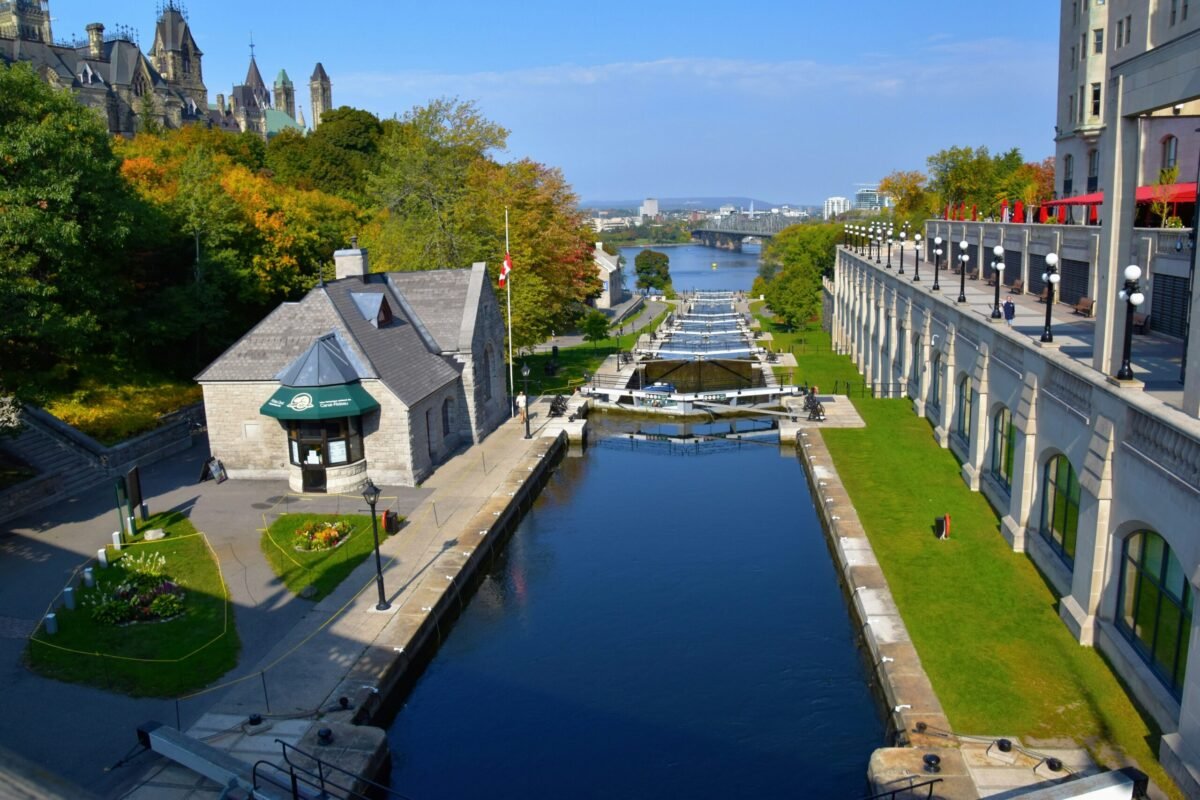
Loop back toward the Rideau Canal locks at the Fairmont Château Laurier. During the summer, boats pass through a manually operated lock system. The work is slow and tactile. In winter, it ices over and can be skated on as a route through the heart of downtown.
The Château Laurier looms next to the canal, imposing but not dominating. You can walk around its exterior or step inside to gaze at its historic interior.
This part of the city is layered. Parliament, water, and heritage buildings are all within minutes here.
Lunch in ByWard Market
As you head to ByWard Market to grab a bite to eat, take a look around, as it is Ottawa’s most lively area.
Once you leave Parliament Hill, there is a dramatic shift in the architecture. The more formal stone structures give way to the more laid-back brick buildings. The energy of the entire area rises, though it does not become overly frenetic.
If you’d like a more upscale experience but still want to keep it easygoing, head to Play Food & Wine, where you can sample a variety of flavours in their small plates. They also offer a more laid-back experience and are popular with locals at Chez Lucien, where burgers are the speciality. If a more formal dining experience in a beautifully renovated former bank is what you are looking for, you’ll find one of the most elevated dining experiences in the city at Riviera, which is also just a short walk away.
Don’t be in a hurry. A slow meal in this city is much appreciated and will be rewarded.
Afternoon at a Major Museum
Choose one major institution.
Option One: National Gallery of Canada
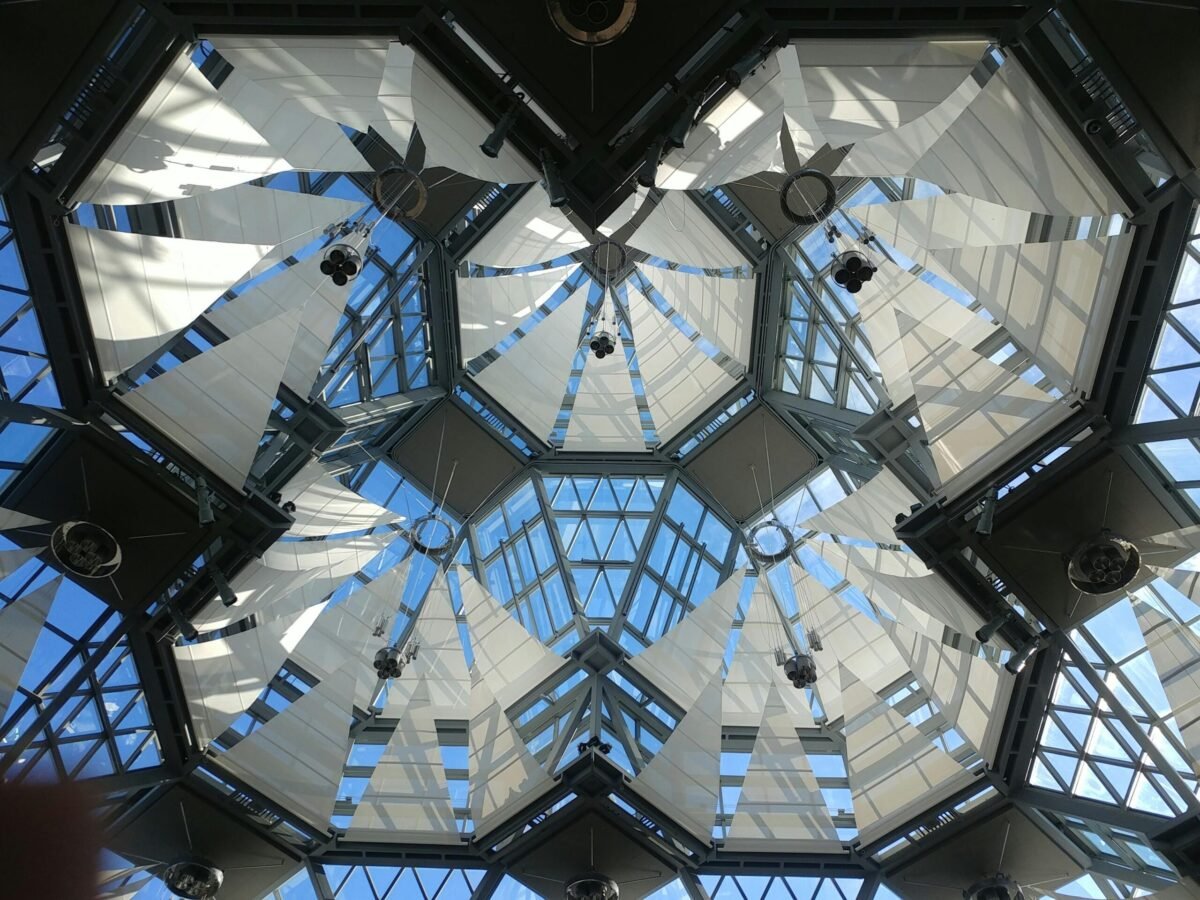
The National Gallery of Canada is close to ByWard Market and is relatively easy to fit into your afternoon. The building’s design is dramatic; glass structures fill the facility with light. The large spider statue, Maman, sits on the lawn outside; it’s one of Ottawa’s most photographed sculptures.
A space that feels significant, even if you don’t know much about art.
Option 2: Canadian Museum of History
If you prefer history and panoramic views, cross the Alexandra Bridge into Gatineau to tour the Canadian Museum of History. The architecture follows the river in a natural curve, and the terrace boasts one of the best views back toward Parliament Hill.
Two hours at least for either. Doing both in an afternoon would be a watered-down experience.
Evening in the City Centre
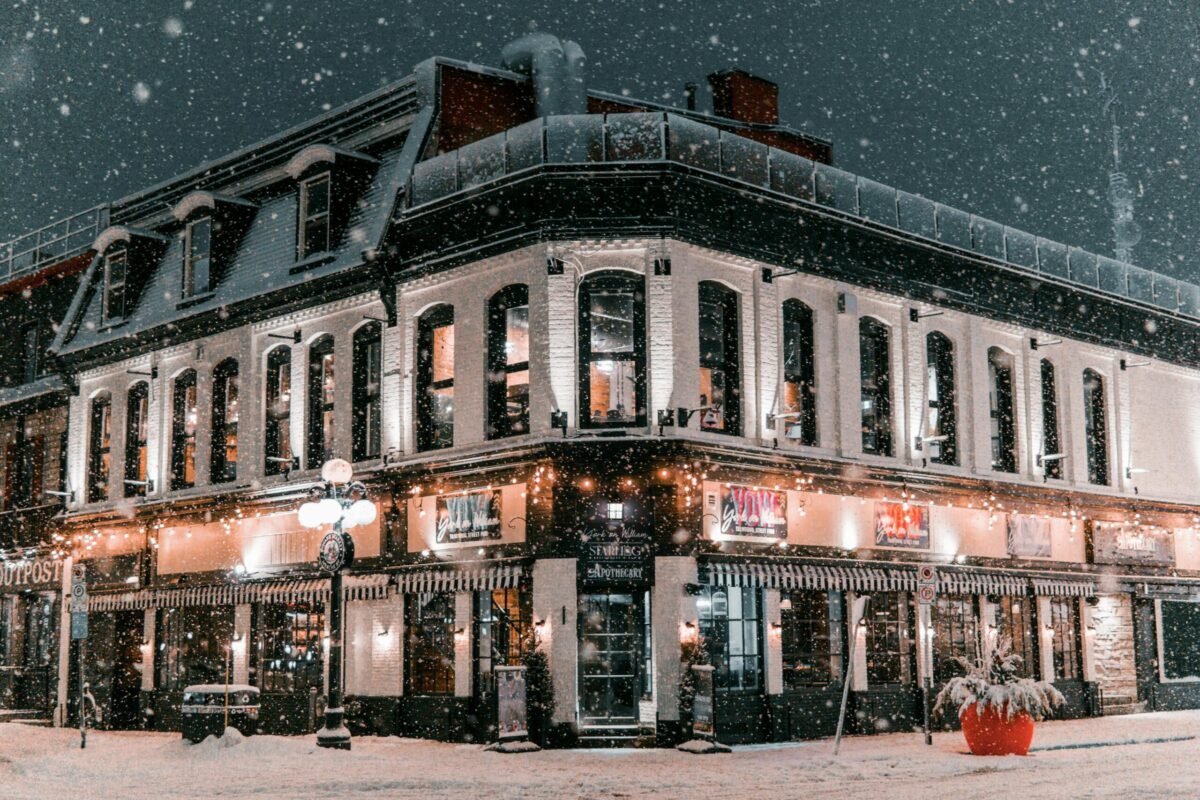
The transformation from day to night in Ottawa isn’t stark, but it is peaceful.
The ByWard Market becomes busier, particularly on weekends. You can feel the ambience at places like Oz Kafe or Sidedoor Contemporary Kitchen without having to shout to be heard. If you want balance, head back to Elgin Street, where Town serves a seasonal Canadian menu in a cosy space.
After dinner, take a stroll along the canal or return to Parliament Hill. The buildings are lit up and cast their reflections on the water, and somehow the city seems to take a breather in a way that many capitals don’t.
Day One is meant to leave you oriented, not exhausted.
Day Two: Neighbourhoods and Everyday Ottawa
Day Two shifts focus from institutions to residential life. Here, the touchpoint becomes more personal.
Centretown in the Morning
Centretown is directly south of downtown and offers central access without the tourist crush of the Market.
Breakfast Options
If you want a breakfast option in this area, your best bet is Wilf & Ada’s. It is a very small restaurant and often has long wait times, but it is well known in Ottawa for a good reason. If you want a lighter breakfast, the Scone Witch is a good option. If you don’t want to sit and wait for a long time, you can go to Happy Goat Coffee instead.
After your breakfast, you can walk around the area. The modest, tree-lined streets give the area a stable, calm, residential feel. It is one of the best neighbourhoods in Ottawa to avoid the party district and is a very practical, quiet location.
The Glebe at Noon
The Glebe is located to the south and has a distinctly residential feel.
Walking Bank Street
Bank Street serves as the main commercial street. You will find independent shops and bookstores here, such as Maker House Co. and Perfect Books. These shops contribute to the area’s feel and are not just geared toward tourists.
At Lansdowne Park, you will find open areas for your kids to run around and sit at the restaurants. There is also a local market or event in the area, and you will want to check it out.
Lunch in the Glebe
Farinella offers Roman-style pizza with a light crust and simple toppings. The Rowan offers elevated dishes without feeling too formal. Cantina Gia has a modern Italian menu in a space that is both polished and comfortable.
The Glebe has a more relaxed feel than the ByWard Market. It is more residential and feels lived-in.
Afternoon in Westboro
Westboro is further west and feels a little bit more modern.
Wellington Street West
Turn down Wellington Street West and browse in the boutiques and cafes. If you need a mid-afternoon break, try Equator Coffee. Another safe bet is Bridgehead Coffee, which began in Ottawa.
Ottawa River Pathway and Westboro Beach
Head toward the river from Wellington Street. The section of the Ottawa River pathway by Westboro Beach spills out onto a wide expanse of sky and water. The skyline becomes distant. Cyclists pass steadily. It’s one of the most tranquil urban stretches in the city.
This might be your favorite part of the visit if it’s a clear day.
Optional Extension Into Gatineau
If time permits, it may be worth seeing Gatineau for another angle on the Parliament buildings. A walk on the Quebec side offers a great view of the Parliament buildings, and helps remind the group of how tight and interconnected the area is.
This is not essential. You can gain the core essence of Ottawa without going to Quebec.
Is 2 days in Ottawa Enough?
For a first timer, absolutely.
In two days, you will see Parliament Hill, the Rideau Canal, ByWard Market, at least one major museum, Centretown, the Glebe, and Westboro, and you will have a walk on both the Ottawa River and the canal. You will get a good understanding of the city’s layout.
What you will not have done is everything. That is deliberate.
Ottawa rewards thoughtful pacing more than aggressive sightseeing.
Final Thoughts on Spending Two Days in Ottawa
Ottawa is not loud. It doesn’t bombard visitors with a continual spectacle. It incentivizes movement by neighborhood, meals lingered over, and hours spent by the water.
If you plan your two days of exploring sensibly, you’ll walk away with a true sense of Canada’s capital, and without the nagging feeling that you left something behind.
Walk the river. Choose one museum. Explore neighbourhoods on foot. Let the city come to you in its own sequence.
That is who Ottawa is.
If you’re hoping for a more comprehensive look beyond this 2-day framework, check out our complete guide to the best things to do in Ottawa.
FAQs for 2 Days in Ottawa
How much walking is involved in a 2-day Ottawa itinerary?
You can expect to take 15,000 to 20,000 steps per day with this plan. While attractions and locations are generally clustered, additional steps are needed for exploring neighborhoods. Comfortable walking shoes are a must, particularly along canal and river pathways.
What should I skip if I only have two days?
Don’t attempt to visit more than one of the larger museums in one afternoon. Skip long regional day trips. This all means avoiding Gatineau Park and Kingston. Stay more centrally to the capital and focus on two neighborhoods so you do not spread yourself too thin.
Are reservations necessary for restaurants in Ottawa?
If you are trying to eat at popular places in the ByWard Market or Glebe area, it is best to make a reservation, as you will likely be waiting for hours during the summer and festival seasons. For weekday dinners, it is less likely, but places like Wilf & Ada’s tend to have wait times even in the mornings.
Is Ottawa lively at night?
While Ottawa does not have a party city atmosphere, the ByWard Market and Elgin Street offer vibrant, busy nightlife. Even in the weekends, the crowds are social rather than intensely party like.
Can I do this itinerary in winter?
This is possible; however, expectations should be adjusted. While walking distances are still reasonable, more time will be spent indoors. In the winter, if the Rideau Canal is open for skating, it is a big bonus compared to the rest of the year when it is just a nice thing to look at.
Is Ottawa more expensive than Toronto or Montreal?
For government or festival peaks, hotel prices in Ottawa’s downtown are similar to those in downtown Toronto. The cost of food and public transport is lower than the average cost in Canada.