Best Things to Do in Niagara Falls
Niagara Falls is more than a destination; it’s the intersection of nature, experience, views, and adventure. Millions come each year to witness the roar of the water, feel mist on their faces, and gaze at the scale of one of the world’s most powerful waterfalls.
But visiting Niagara Falls and taking a trip there isn’t as straightforward as packing your bag and showing up. There’s history to learn, perspectives to value, things worth your time and money, and pacing that makes the trip memorable.
This guide lays out the best things to do in Niagara Falls, how much time to spend where, when to go, how to skip the crowds, which activities are worth booking ahead of time, and how to blend nature with amusement, eating, and wandering.
What Makes Niagara Falls Special?
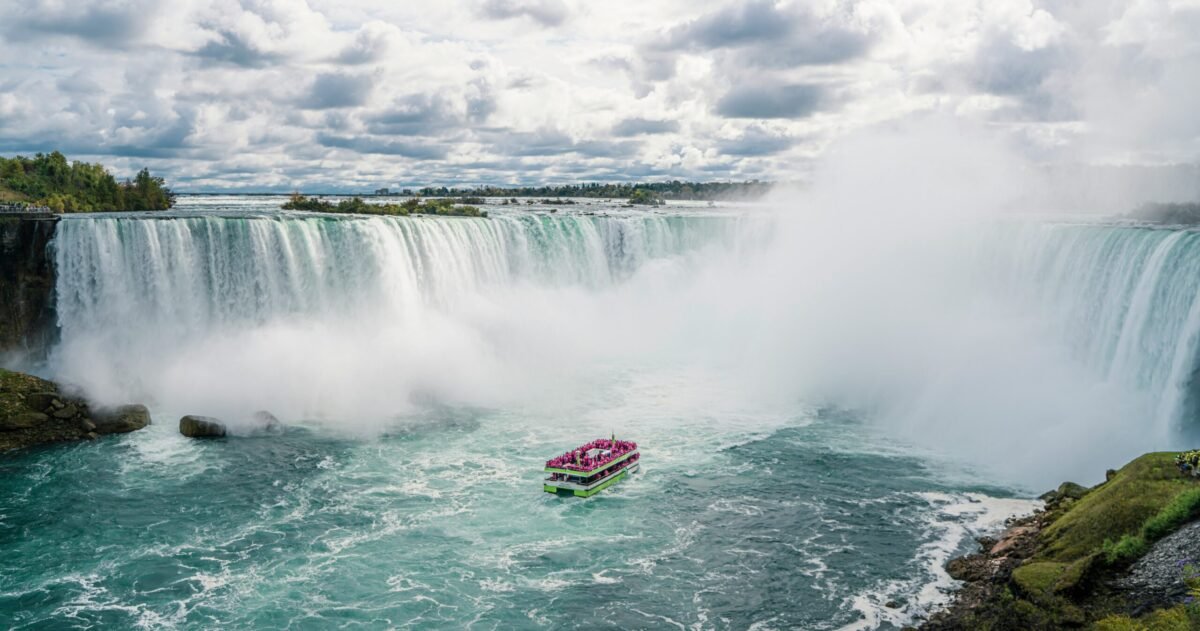
Niagara Falls is not a single destination, but it’s an experience. The falls proper are divided into three sections.
- Horseshoe Falls – the biggest and most powerful part, through which 90% of the water flows.
- American Falls – visible from opposite shore (U.S. side), with rocky outcrops at its base.
- Bridal Veil Falls – the smallest of all three.
The Canadian side offers the most dramatic views because nearly 90% of the river flows over Horseshoe Falls. From Ontario, you see the entire curve of the waterfall head-on.
But Niagara Falls is more than just the waterfall; it breaks down into four natural zones:
- The Falls Promenade and Table Rock
- The Niagara River and Gorge
- Clifton Hill and the entertainment district
- The broader Niagara region, including wineries and Niagara-on-the-Lake
If you limit your travels to a single zone, your impressions will be incomplete. The best visits move gradually between intensity and calm.
Horseshoe Falls: The Main Attraction You Should Not Rush
When you first approach Horseshoe Falls, the sound builds before the sight is fully unveiled. It isn’t a jarring crash like ocean waves. It’s a persistent, low-level roar that fills the air.
Standing at the railing near Table Rock, the scale becomes real. The waterfall is almost seven hundred meters wide. The water flows in thick sheets, not delicate streams. Mist continually rises and changes direction with the wind.
Most visitors spend ten or fifteen minutes here.
That is not enough.
Allow at least 45 minutes here, preferably in daylight. See how rainbows appear and disappear. Note the patterns in the water as it spills over. And the longer you stand there, the more the experience sinks in.
Then come back after dark.
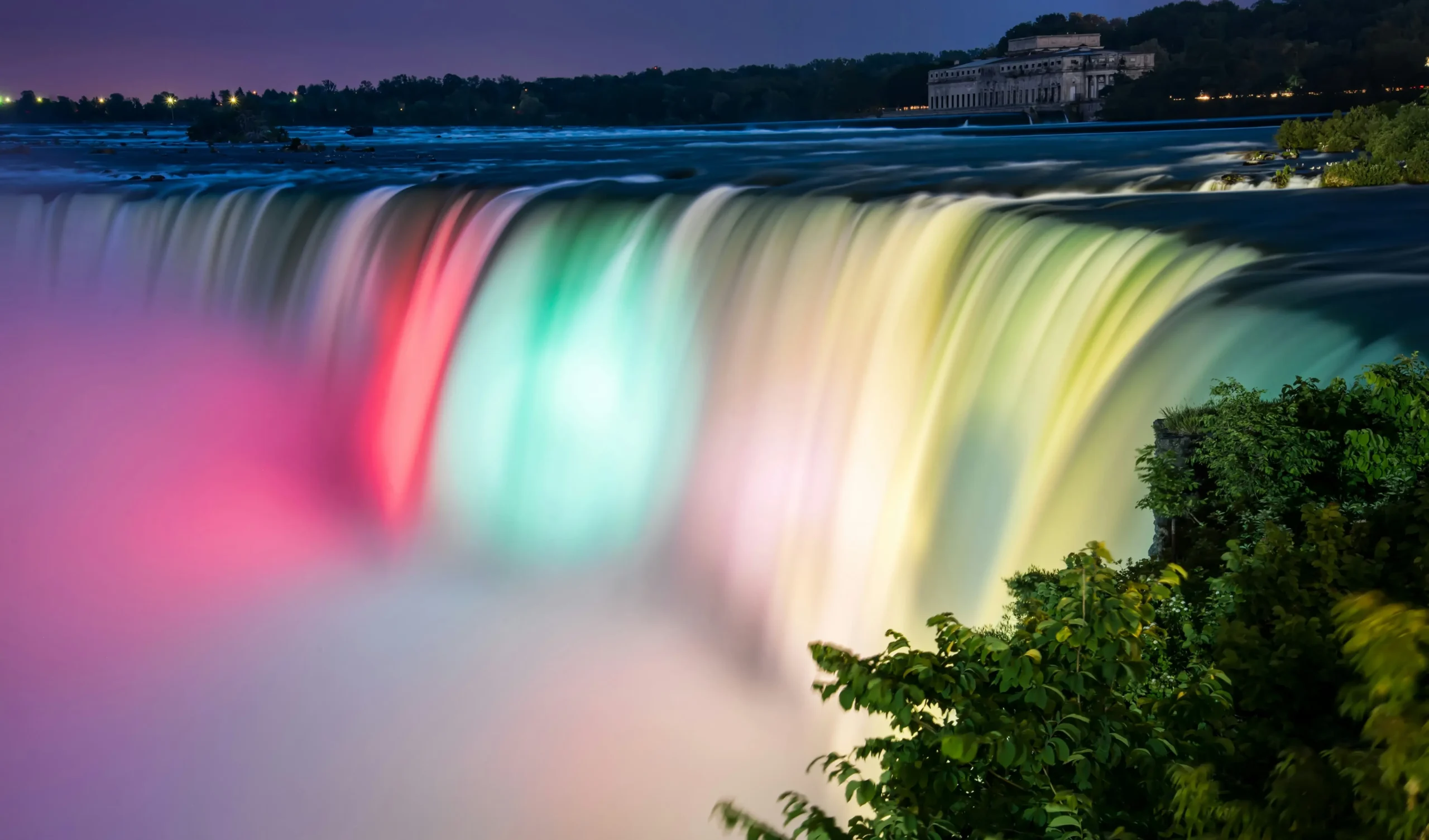
The nighttime illumination changes the falls. Patterns drift slowly over the water. The crowds thin a bit, and the roar sounds more ambient than histrionic.
If you clear out by nightfall, you are skipping a big part of the experience.
Best Times to Avoid Crowds
Summer weekends between 11 am and 4 pm are the busiest time.
For a calmer experience:
- Arrive before 9 am
- Return after 7:30 pm
- Visit midweek when possible
Niagara City Cruises: The Classic Boat Ride Into the Mist
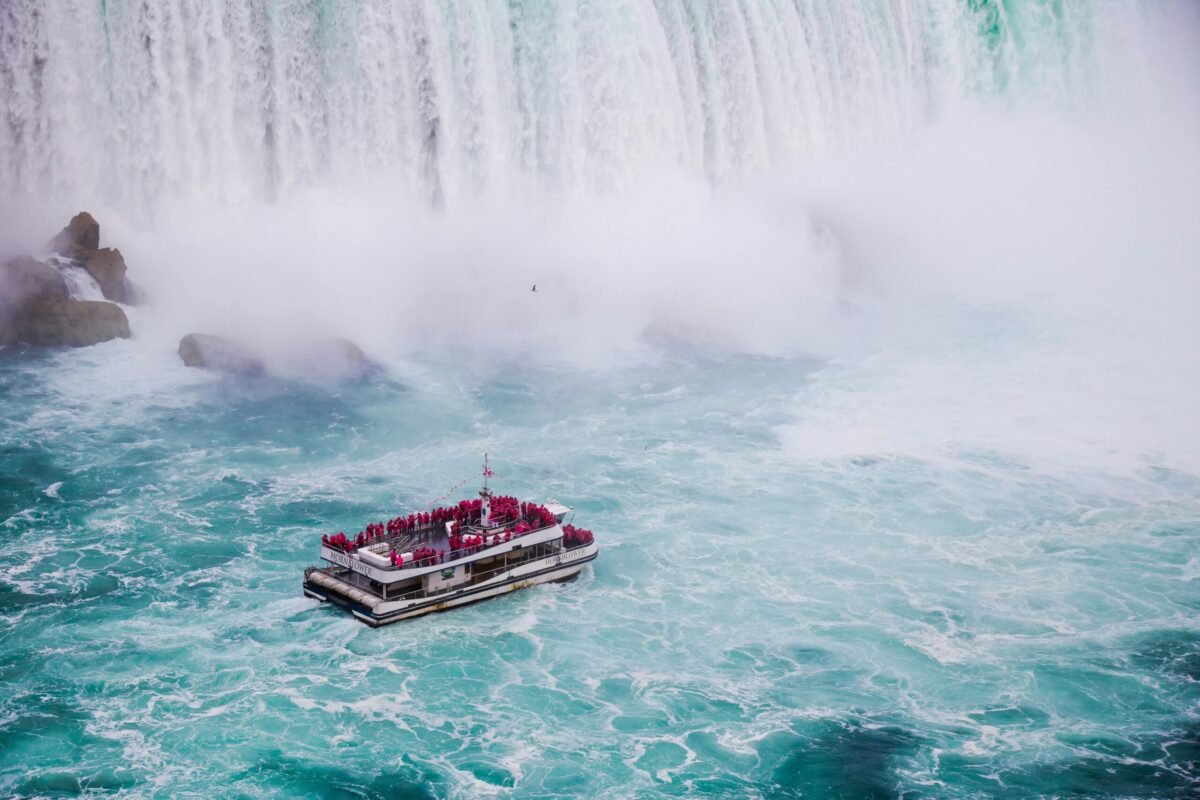
The boat tour run by Niagara City Cruises is often referred to as the top attraction in Niagara Falls, and for many visitors it is.
You descend to river level and board with dozens of others in red ponchos. The boat first glides toward American Falls, which gives you a sense of the height of the cliff. Then it pitches to Horseshoe Falls.
The mist thickens quickly. The air cools. The roar intensifies. Conversation becomes nearly impossible. Visibility drops.
You are not looking at Niagara Falls for a few minutes. You are inside it.
How Much Time to Allocate
Plan on it taking between 60 and 90 minutes, plus wait time in peak times.
Who Should Do It?
Repeat visitors may not bother with this if they prefer to explore in more peaceful conditions, but it’s still one of the most powerful ways to feel the scale of the falls.
Journey Behind the Falls: What It’s Really Like
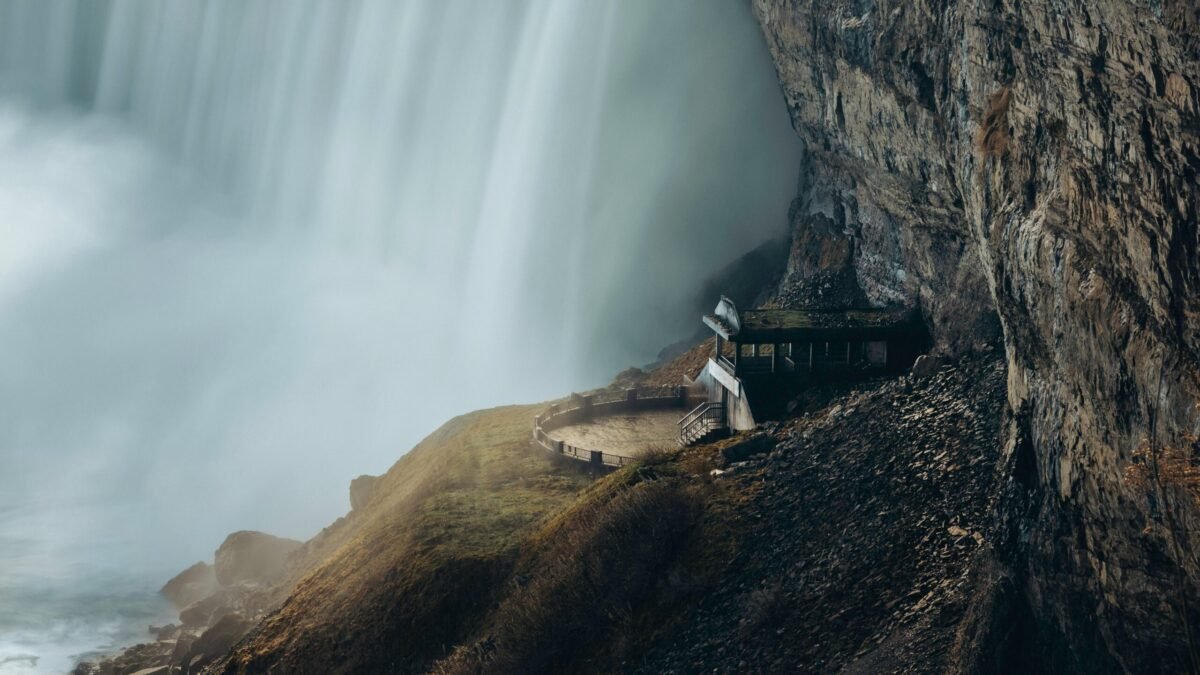
At Journey Behind the Falls, you descend through bedrock tunnels behind Horseshoe Falls.
It’s an experience that’s less about views and more about closeness. It means water can crash just feet away through openings in the rock. You can feel the vibration through the platform under your feet.
There is also a lower outdoor deck near the base of the falls, where the mist feels denser, and the wind is stronger. Don’t forget to book your tickets in advance at Niagara Parks Official website.
Expect to spend about 45 to 60 minutes. It complements the boat ride rather than replacing it. One immerses you from below. The other has you entering the structure.
Skylon Tower: The Best View of Niagara Falls From Above
It’s nice to see the geography from above after getting up close and personal with the falls.
From the observation deck at Skylon Tower, you can see how the river narrows before crashing over the edge. You realise how small the Falls District is, and the American skyline is across the water.
Sunset is the best time to visit. Stick around through twilight to watch the illumination start.
Plan for about an hour here.
Niagara Parkway: The Most Scenic Walk in Niagara Falls
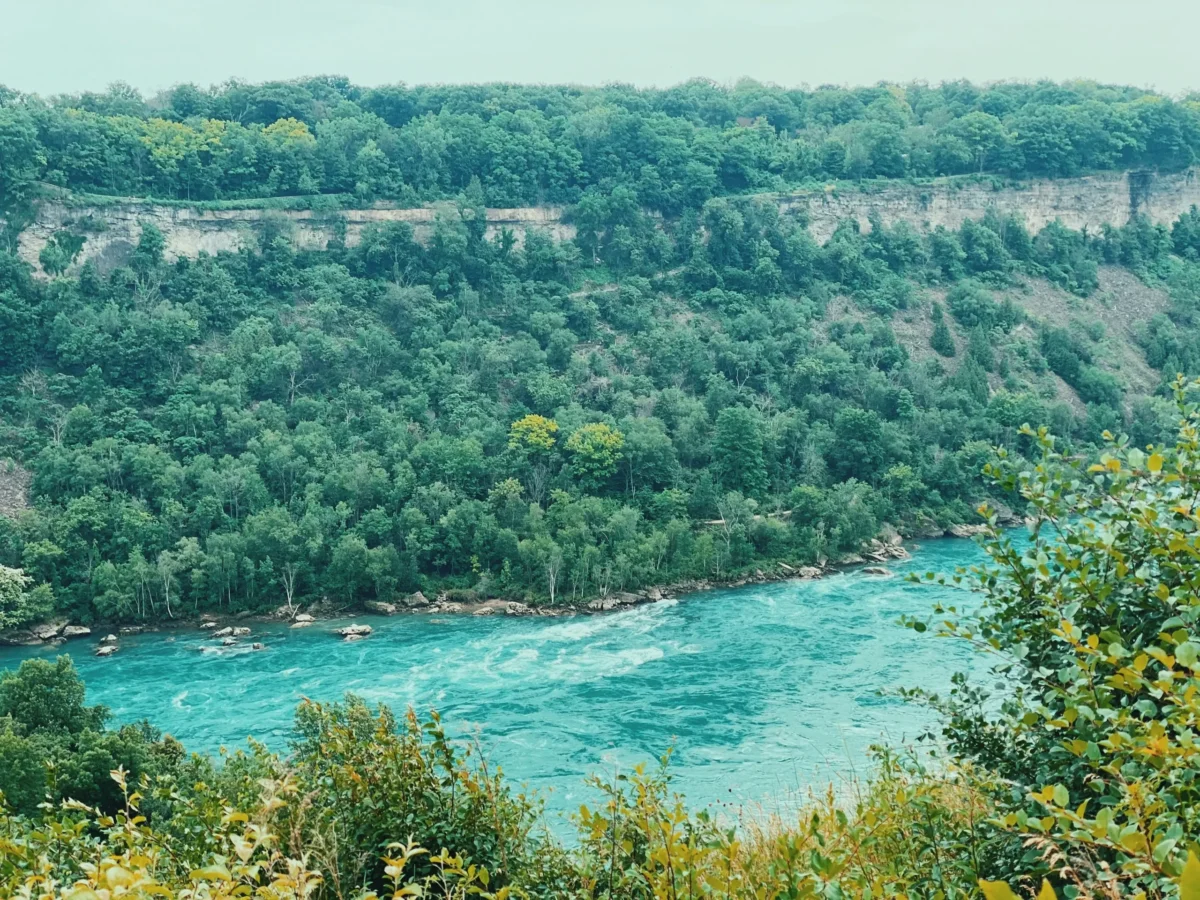
The Niagara Parkway follows north along the river toward Niagara-on-the-Lake.
Walk fifteen minutes from the main falls area, and the mood instantly transforms. The river flows calmly. The crowds thin. The walkway is lined with benches and gardens.
Plan for at least an hour if you would like to enjoy a relaxed walk. Two, if you’re going to be taking pictures and dawdling.
This is especially stunning in autumn when the foliage changes the landscape.
Niagara Glen: Hiking the Gorge and Whirlpool
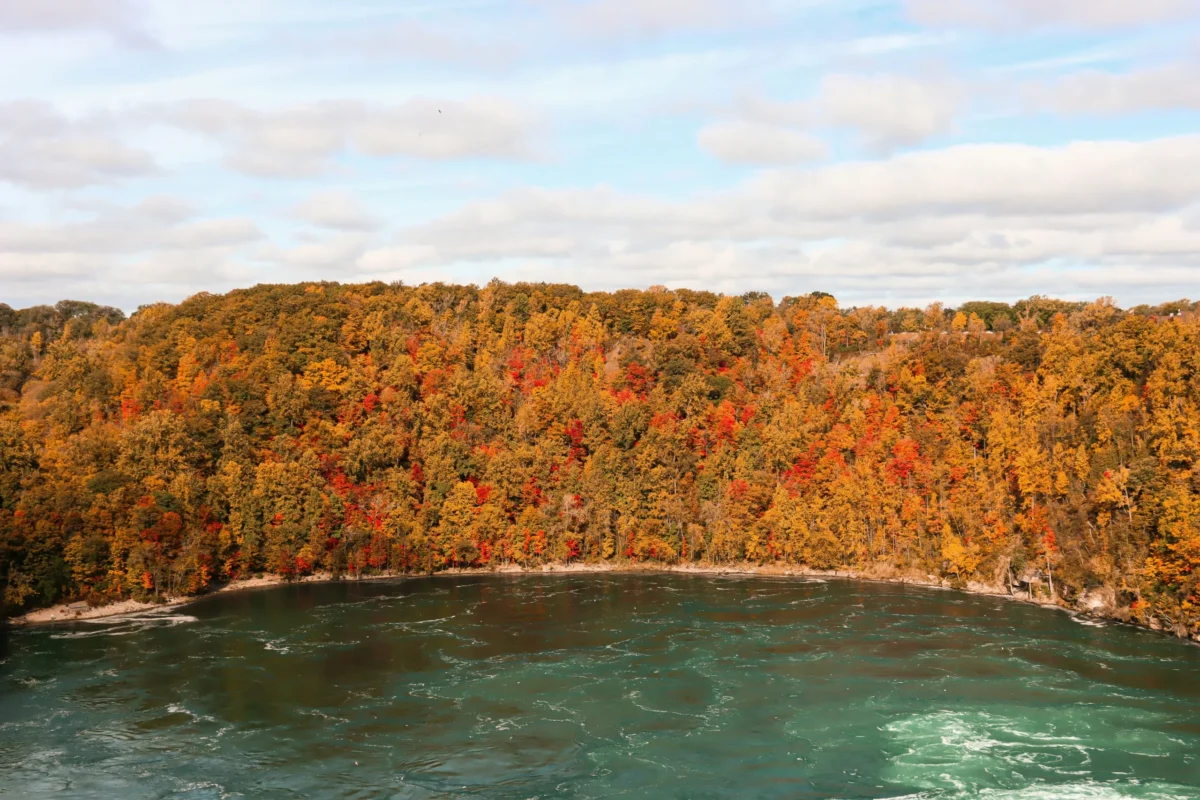
The Niagara Glen Nature Reserve provides a totally different experience from the big viewing sites.
Trails plunge steep banks to the gorge that holds the fast-churning Niagara Whirlpool downstream from the falls. The terrain is stony and uneven, so don’t forget to wear proper shoes.
Plan for atleast at least 1.5 to 2 hours here.
It’s perfect for visitors who seek something more natural than the busy main promenade.
Clifton Hill: Is It Worth Visiting?
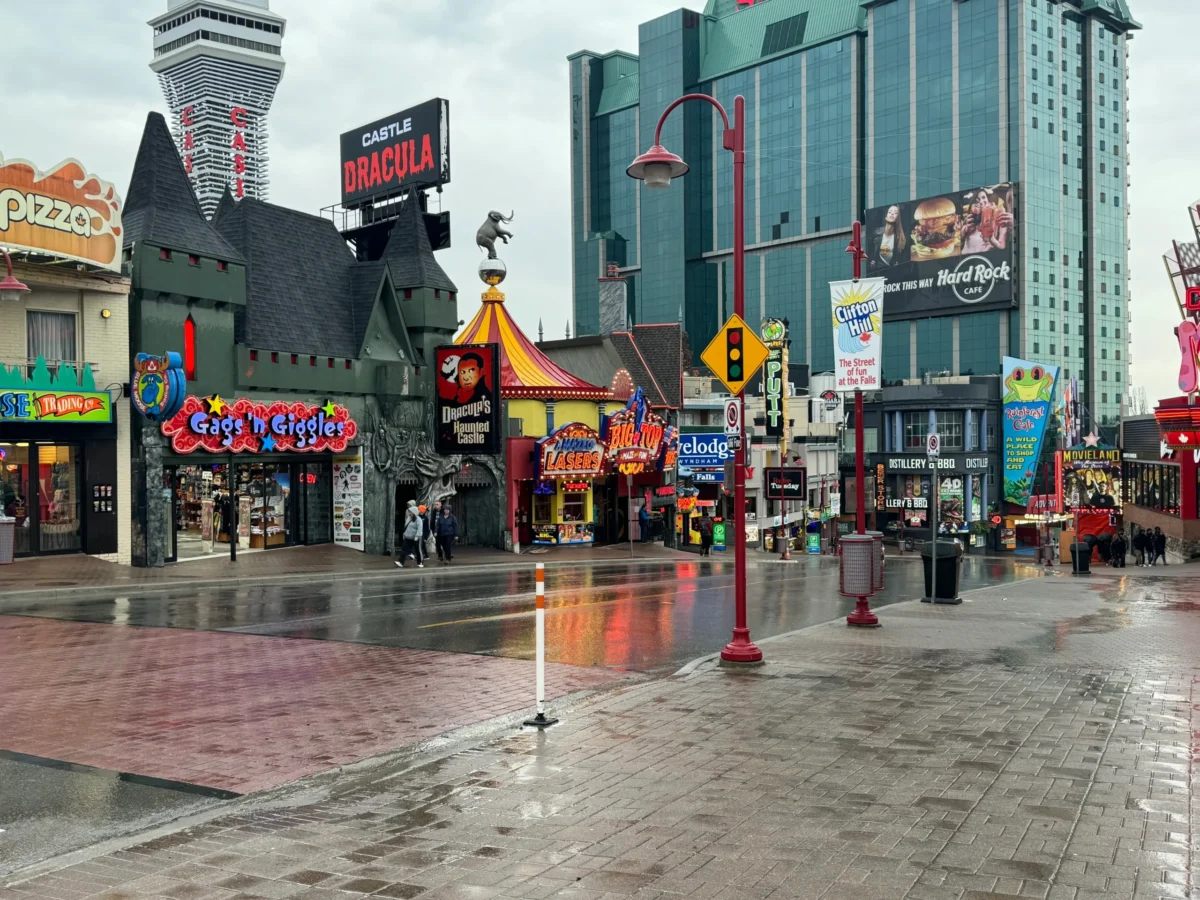
Clifton Hill is Niagara’s largest and most commercial stretch, situated just above the Falls. The neon-lit streets, arcades, themed attractions, and chain restaurants are lined along the streets, creating a carnival feel that is very different from the natural landscape around.
The headline attraction is the Niagara SkyWheel, the controlled Ferris wheel offering views of the Falls and skyline. Tickets cost about $15-$17 CAD for adults and $7- $10 CAD for kids. The rides last about 8-12 minutes. At night, the view is more impressive when the Falls are lit up.
Indoor activities include Ripley’s Believe it or Not!, where admission is generally approximately $30 CAD for adults and between $20 and $25 for children. Mini putt, arcades, haunted houses, and motion theatres generally range from $6 to $ 15 CAD per activity.
If you are planning to visit more than one attraction, bundle passes like the Clifton Hill Fun Pass can be more affordable than buying individual tickets.
For most adults, about one or two hours is sufficient to walk the strip, ride the SkyWheel, and then enter one of the attractions. Families with kids can easily stay for a half-day here. Clifton Hill works best as a short, high-energy visit before returning to the riverfront and the more tranquil viewpoints along the Falls.
Day Trips From Niagara Falls: Niagara-on-the-Lake and Wine Country

Niagara-on-the-Lake keeps the vibe a few clicks to the north, and just 20 minutes away from the Falls. The neon glare of Clifton Hill yields to tree-lined streets, preserved 19th-century buildings, and a slower, more cultured tempo. It feels curated but not fake: polished storefronts, flower baskets, and quiet residential lanes characterise the town centre.
Vineyards stretch the surrounding countryside, making this one of Ontario’s oldest and most established wine regions. This area, especially known for icewine, has many wineries where tasters can sip on the patio. Even a brief winery visit, combined with some time on Queen Street, gives you a solid idea of the place.
If you’re spending the night in Niagara Falls, plan for at least a half day here. Stroll along the lakefront where the Niagara River flows into Lake Ontario, shop in boutique stores, and grab some lunch at a café or wine bar. The setting is tranquil and picturesque, especially in the late-afternoon light.
For a little history, visit Niagara Parks Power Station back around the Falls. The restored generating station details how the waters of Niagara put early industry to work and moulded the area’s growth, providing useful context for the visual wonder you will find along the river.
How Many Days Do You Really Need in Niagara Falls?
A half-day takes you to see the falls and take the boat ride.
One full day gives you the falls by day and at night, and one or two major attractions.
Two days allow for exploration of Niagara-on-the-Lake, scenic walks, and a slower pace.
Three days give time for hiking, wineries, and leisurely dining.
An ideal time for most visitors is 1.5 to 2 days.
Visiting Niagara Falls From Toronto
The drive takes about 1.5 hours without traffic, but on summer weekends, it can be twice as long.
If you’re day-tripping, leave Toronto before 8 a.m.
Overnight visitors get to experience night lighting that day-trippers don’t see.
Best Time to Visit Niagara Falls
Niagara Falls is a 365-day destination, but the experience varies by season.
Summer (June to August) offers full access to boat tours, observation decks, and gardens, with extended evening hours. All major attractions are open daily, and the Falls are lit up nightly. The downside is the crowds and pricier hotel rates. Be prepared for crowded sidewalks, particularly around noon and on weekends.
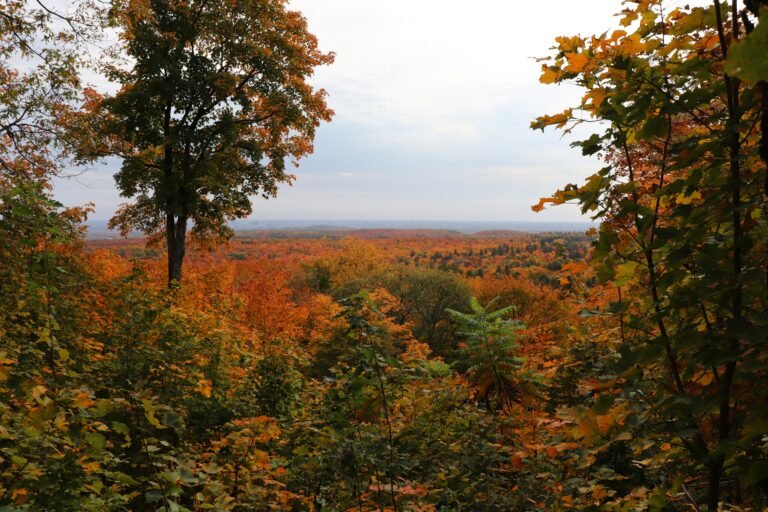
Fall (September to October) is generally the best time to visit. Crowds subside after Labour Day, temperatures are cooler and more pleasant, and the Niagara Parkway is particularly picturesque with fall foliage. But most attractions are open, though hours can start to shorten in late October.
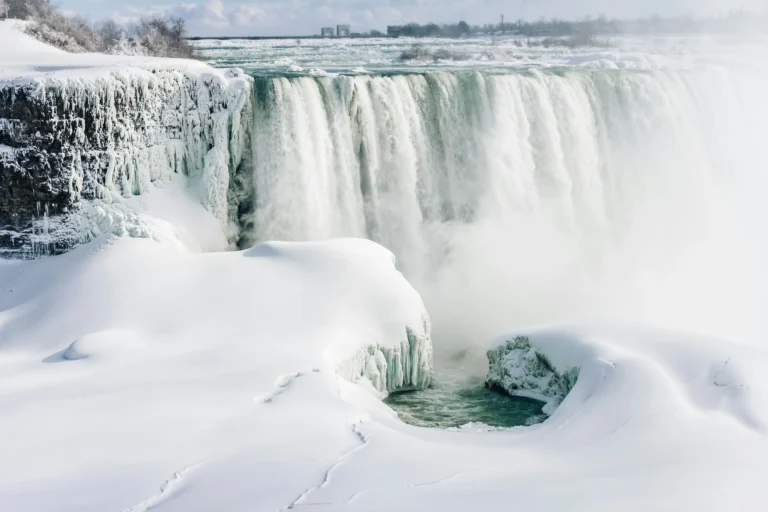
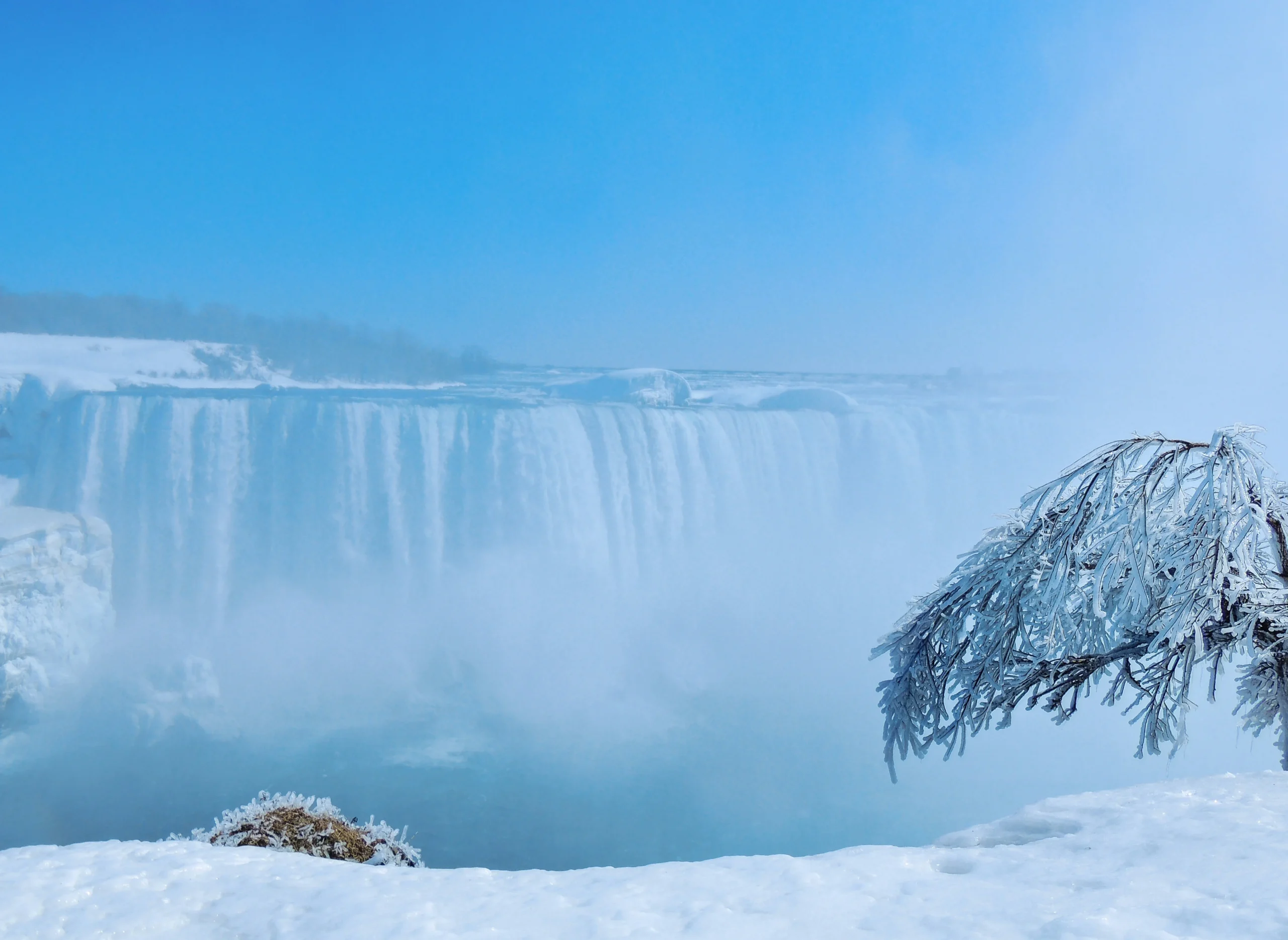
Winter (December to February) freezes the Falls into a theatrical landscape of ice. Frost hangs along railings and trees, forming striking shapes. Even though some attractions close or scale back hours, the Winter Festival of Lights stages evening illuminations throughout the parklands. It’s less noisy, cooler, and visually distinct.
Spring (April to May) is a time of massive water flow as snow melts in the mountains upstream. Gardens are starting to bloom, and crowds are manageable before summer tourism peaks. The weather may be a little unpredictable, but hotel prices are usually lower compared to summer.
For first-time visitors interested in full access without peak congestion, late May, early June, and September usually offer the best overall balance.
Common Mistakes to Avoid in Niagara Falls
Visiting Niagara Falls is easy, but it’s just as easy to experience it poorly.
The most frequent mistake is rushing straight to the main waterfall. Visitors walk up, snap some photos, and leave in minutes. The falls aren’t only a sight to see, they’re something to experience. Stay longer. Let the sound settle. Watch how the mist moves. If you give it time, the experience deepens.
Another common mistake is skipping the nighttime lights. The falls are a whole different beast when darkness descends. If you leave before sunset, you’ll miss one of the most atmospheric moments of the entire visit.
Another common regret comes from trying to squeeze everything into a single day. The boat ride, Journey Behind the Falls, Clifton Hill, and Niagara-on-the-Lake all take time. Hurrying through them turns the journey into mayhem, not memory.
And finally, don’t judge Niagara Falls on Clifton Hill alone. The entertainment strip is lively and amusing, but it’s just one skin of the destination. Walk the parkway. Step away from the crowds. The more tranquil parts of Niagara are usually the most rewarding.
Final Thoughts
Niagara Falls is not just a pit stop. It’s an experience shaped by pacing.
If you slow down at the railing, inhale the mist on the boat ride, return after dark, and venture off the main tourist strip, your trip seems much more meaningful.
Be intentional about it, and Niagara Falls can be something that you think of for the rest of your life rather than something that you experienced.
FAQs for Best Things to Do in Niagara Falls
How many days do you need in Niagara Falls?
Most people spend 1 to 2 days at Niagara Falls to experience it properly. One day is enough for the main waterfall and a few attractions. Two days would give time for Niagara-on-the-Lake, scenic strolls, and a leisurely pace.
Is Niagara Falls worth visiting?
Yes, especially looking from the Canadian side. The scale of Horseshoe Falls is striking, and with a backdrop of natural beauty, attractions, and surrounding wine country, it’s more than just a photo opportunity.
What is the best time to visit Niagara Falls?
Late spring and fall provide the best combination of pleasant weather and manageable crowds. Summer: Full attraction access, but it’s peak season. Winter has special ice formations and the Winter Festival of Lights.
Should I visit Niagara Falls from Toronto as a day trip?
Yes, it can be visited as a day trip from Toronto, but an overnight stay is more ideal. Staying overnight lets you see the falls lit up at night without rushing.
What is better: the boat ride or Journey Behind the Falls?
First-time visitors find the boat ride far more immersive and dramatic. Journey Behind the Falls is a more structured view from behind the waterfall. Many visitors opt to do both.
Is Clifton Hill worth visiting?
Visiting Clifton Hill makes sense if you are a family with kids, or anybody who enjoys fun attractions. Adults typically stay one or two hours before reconvening in the natural areas.