Where to Stay in Québec City: Upper Town, Lower Town or Saint-Roch?
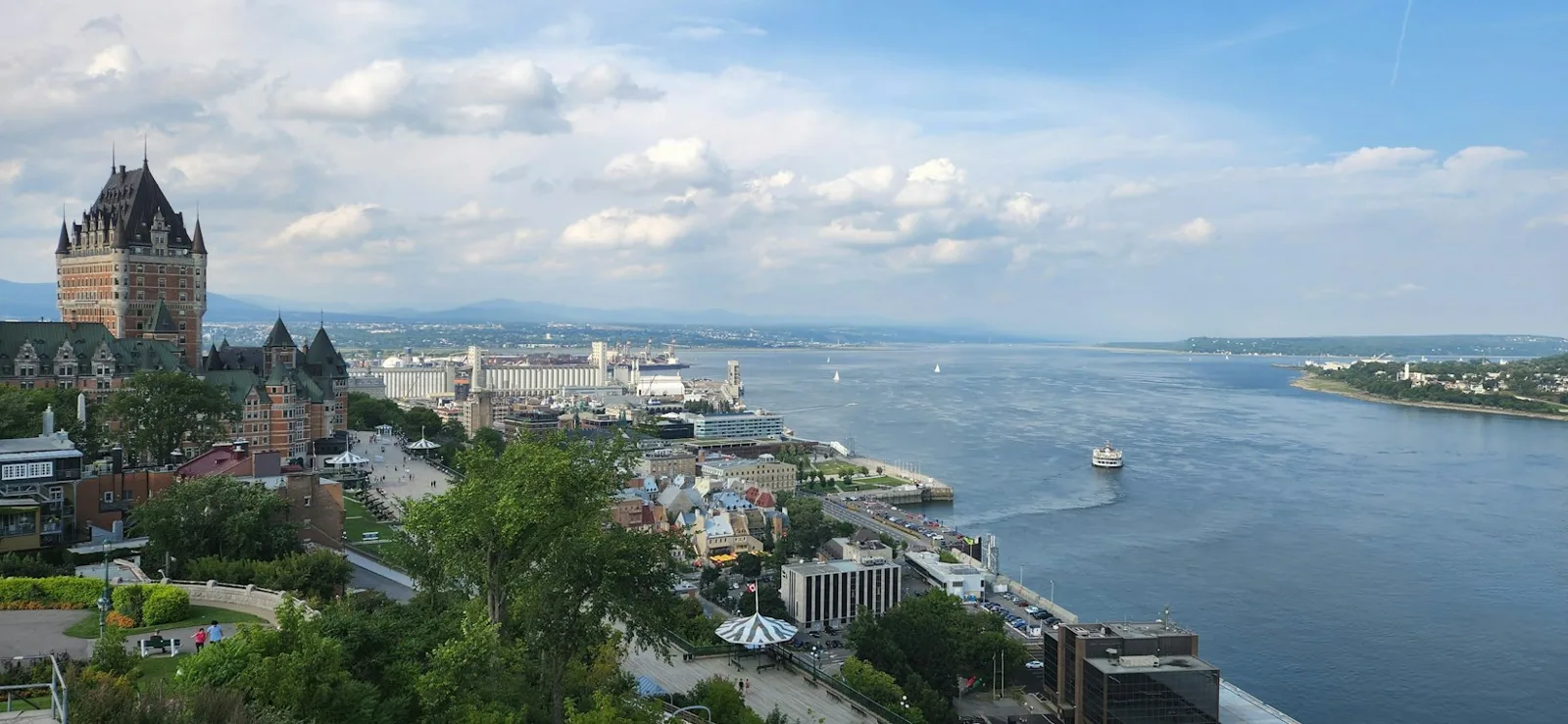
If you’re choosing where to stay in Quebec City for a first trip, start with the hill. Upper Town puts Dufferin Terrace and the walled streets within easy reach. Lower Town works if you want Petit-Champlain, the port and dinner near the water. Saint-Roch gives you a neighbourhood stay with cafés and shops around Rue Saint-Joseph. The right base depends on where you’ll spend your evenings and how often you want to walk up to the old town. Use the Québec City travel guide to compare the areas with your arrival route.
Choose your base in a minute
Upper Town: best for a short first visit, the terrace and dinner inside the walls.
Lower Town: best for Petit-Champlain, the waterfront and the Musée de la civilisation.
Saint-Roch: best for a neighbourhood stay if you’re comfortable with a bus ride or uphill walk to the old city.
Saint-Jean-Baptiste or Montcalm: worth a look if you have extra days and want shops, parks or museums outside the walls.
Where to stay in Quebec City by neighbourhood
Upper Town: the simplest base for a short first visit
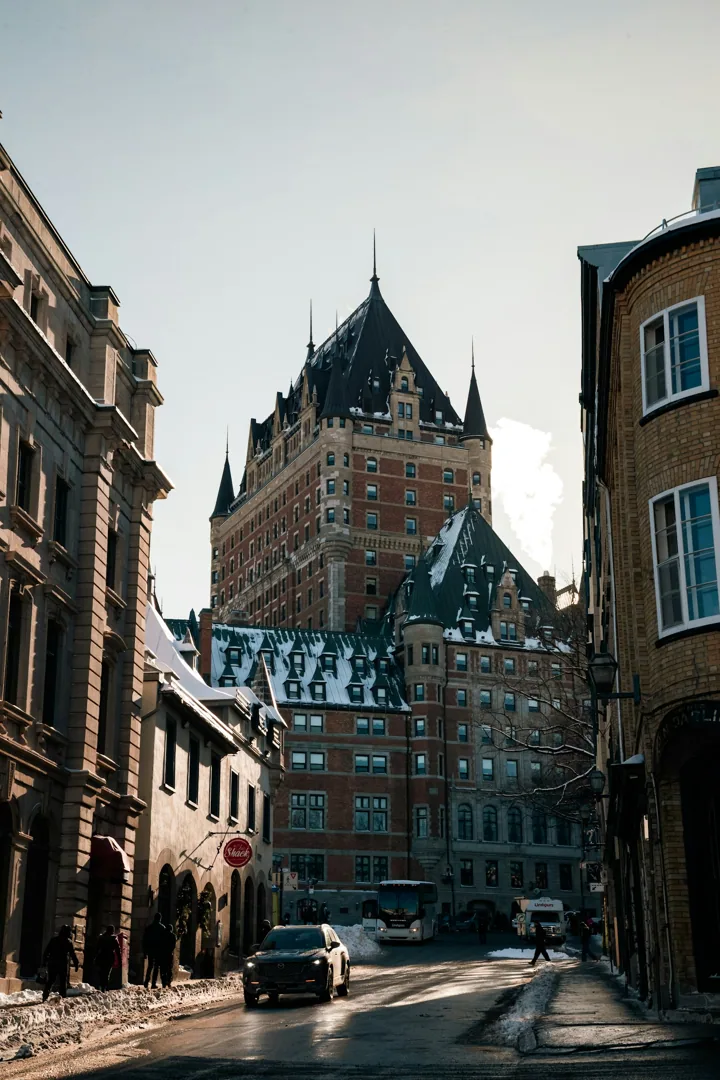
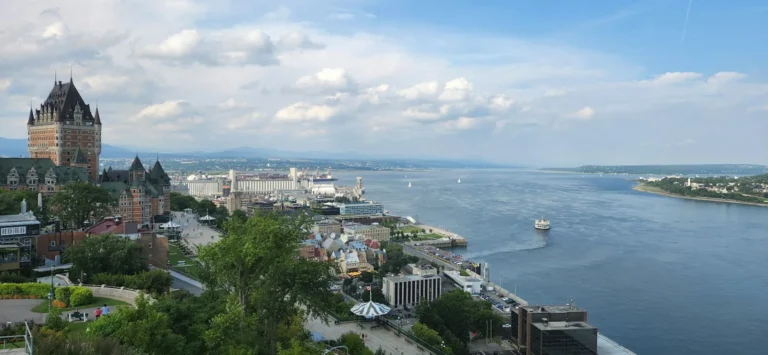
Look near Place d’Armes or the streets leading to Rue Saint-Jean. You can step out for an early look at Château Frontenac and the river, return for a break and walk out again for dinner. If you’re spending only two nights here, that convenience can be worth paying for. It also works well in winter when you want the choice of several short outdoor walks from the same base.
Being in Upper Town doesn’t guarantee a level walk. Check the route from your room to Dufferin Terrace and the cafés or restaurants you expect to use. If you arrive by rail at Gare du Palais, look at the final uphill leg. The Montréal to Québec City train guide compares Gare du Palais and Sainte-Foy for different hotel locations. Rolling luggage a short distance on uneven pavement can be more tiring than a longer level walk elsewhere. Arrange the final leg if it makes arrival easier.
A river view is a nice extra if you expect to spend time in the room. Otherwise, pay attention to street noise and the location of the hotel entrance. Ask about lifts and any steps from the pavement before booking if you need them. Staying near Château Frontenac is enough to enjoy the terrace each day. A room inside the hotel is a separate choice about the stay itself.
Lower Town: for Petit-Champlain, Place Royale and the river
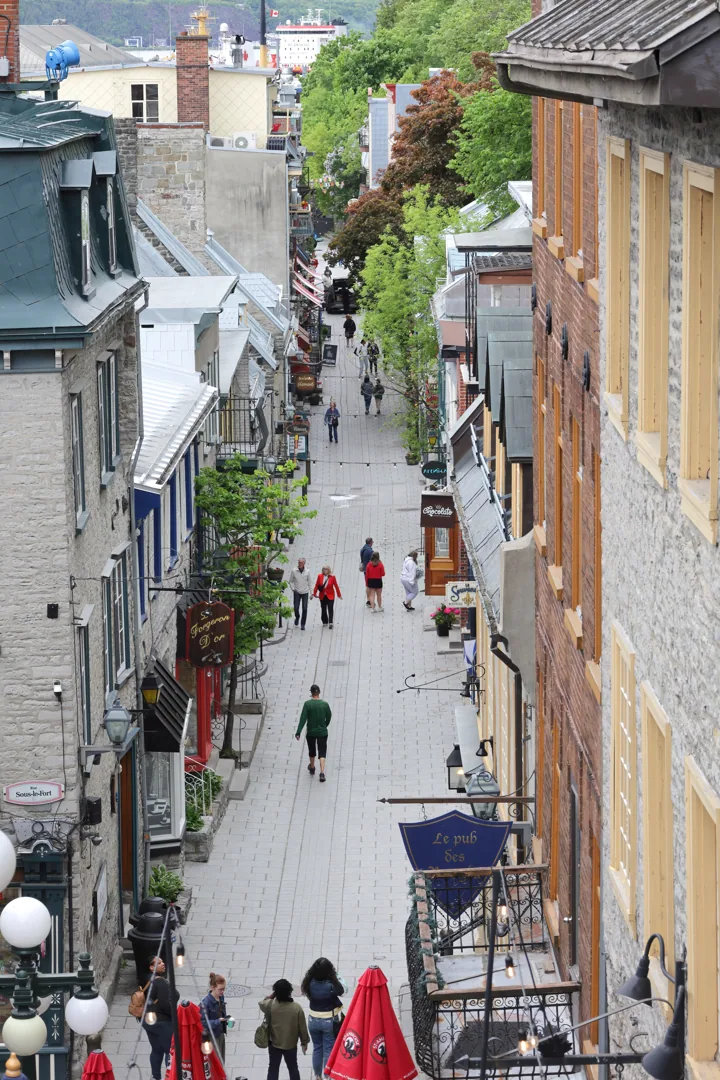
Choose Lower Town if your favourite part of the plan is Rue du Petit-Champlain, Place Royale and the waterfront. You can walk out early, find a quieter stretch near the port and head back to the room between a museum and dinner. It suits a trip where you want to spend the evenings close to the river. The Musée de la civilisation is a useful indoor stop when the forecast changes.
Look at the exact address. Petit-Champlain and the port cover different blocks, and a property described as Lower Town can still be a walk from the restaurant or square you had in mind. The Old Québec funicular helps link the two levels when it’s running, but check its operating hours and the paths to each boarding point. Plan a walking or ride option for an evening return.
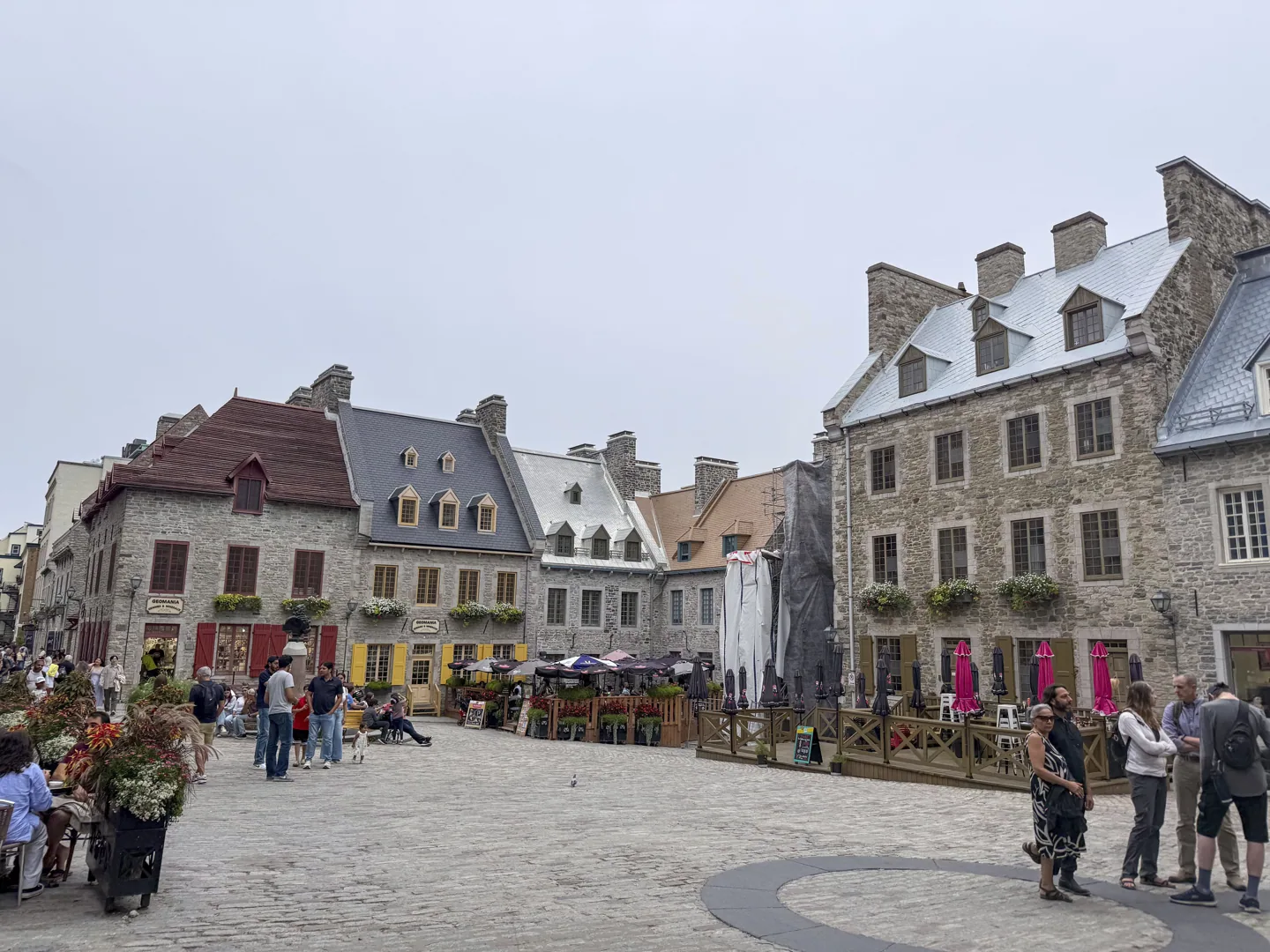
This base suits a slower stay. Spend an early morning in Place Royale or take a waterfront walk before heading uphill. If you intend to visit the Plains of Abraham, the terrace and Upper Town most days, choose your hotel with those repeated trips in mind. A quiet room near the river can feel far away if you keep crossing the hill.
Saint-Roch: for a neighbourhood stay around Rue Saint-Joseph
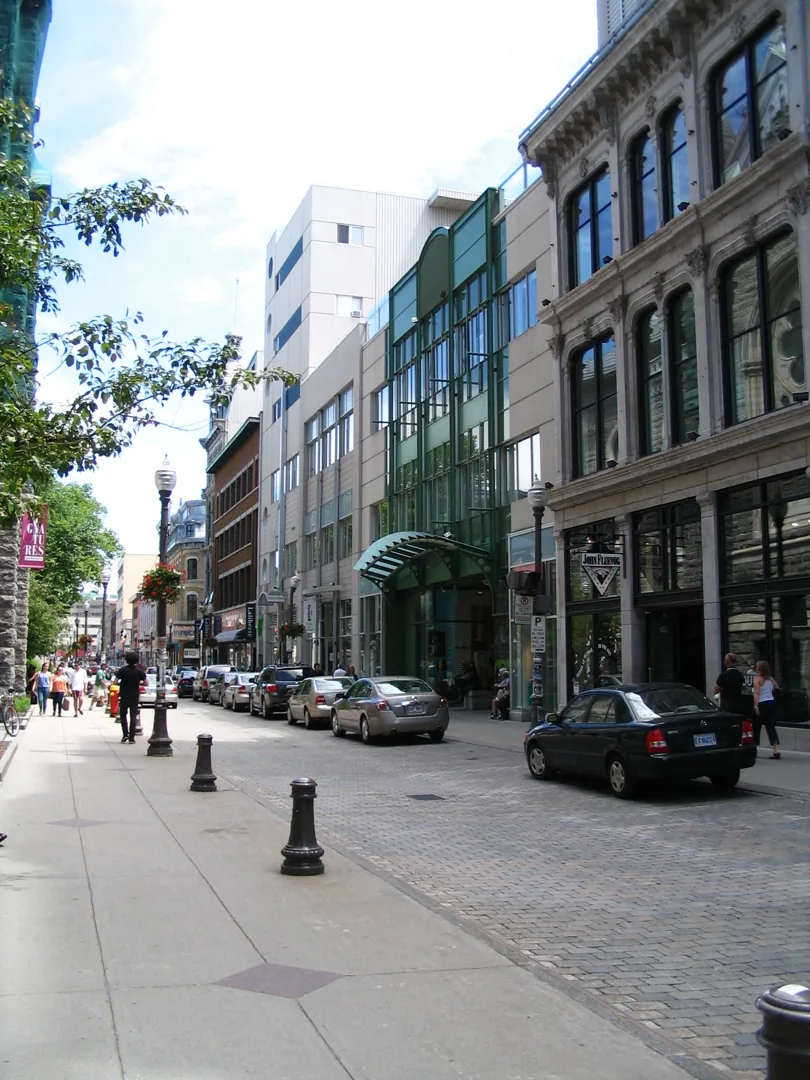
Saint-Roch works for visitors who want dinner, cafés and shops in a neighbourhood outside the historic core. Start with the blocks around Rue Saint-Joseph Est and map the walk to your bus stop and accommodation. The lower elevation makes some local walks simpler, but getting to Dufferin Terrace still means a climb or transit.
This is a useful base if you have extra time, want a different neighbourhood each afternoon or find a room that better suits your budget and group. If you only have one full sightseeing day and expect to spend all of it in Old Québec, factor in your round trips. Check the Québec City sights and neighbourhood stops you want to visit before choosing your base. The time saved by staying closer may matter more on that short visit.
In the evening, check how you’ll return from your dinner or theatre outing. A bus route or taxi that is straightforward in the afternoon can involve different timing later. Use RTC visitor information to check the actual route rather than assuming you’ll walk it every time.
Saint-Jean-Baptiste and Montcalm: for a longer or quieter trip
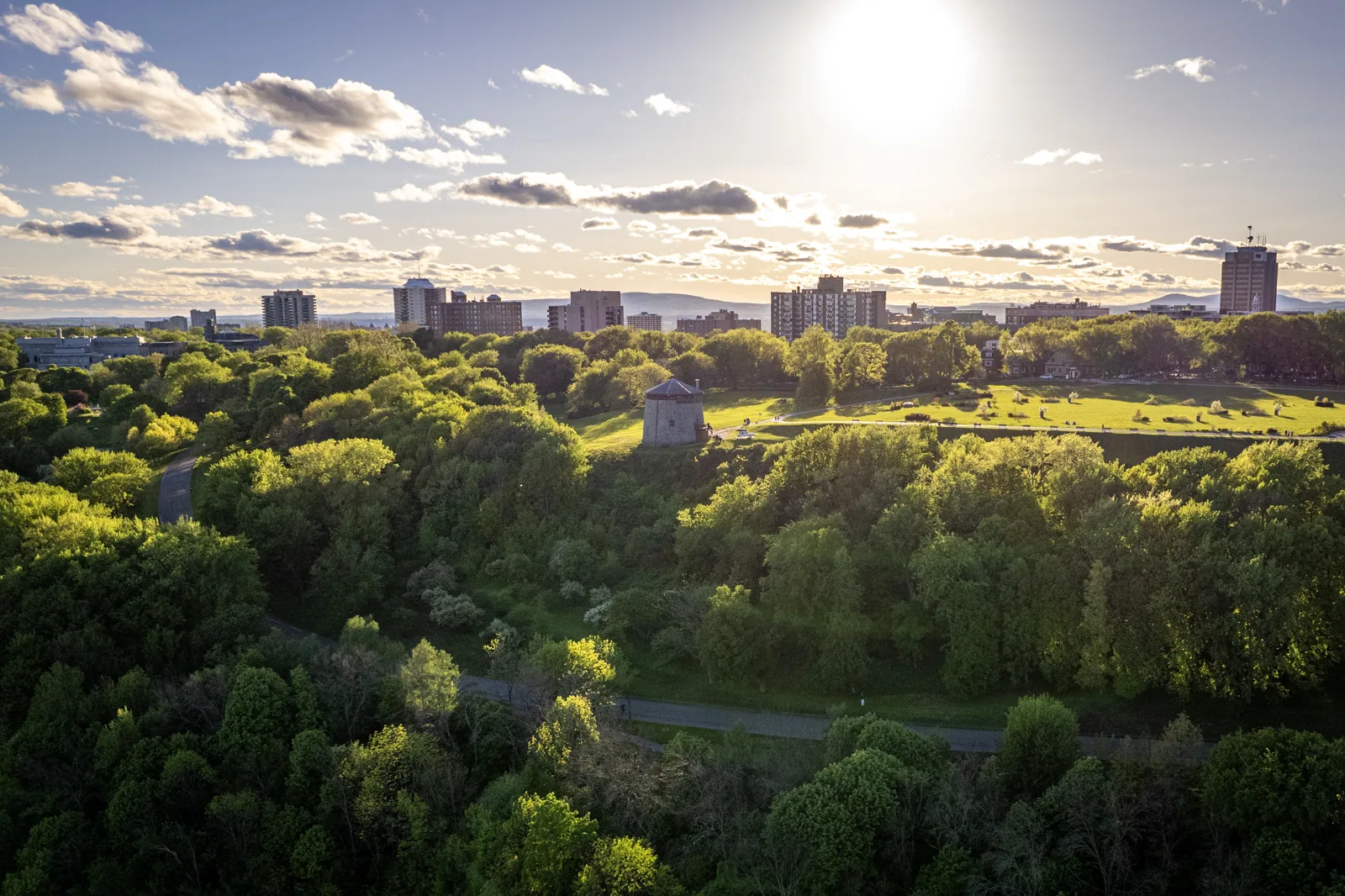
Look at Saint-Jean-Baptiste if you want to spend time on neighbourhood streets and still walk toward the old gates. The walk to the historic centre varies by address. Check where you would eat breakfast and the route back after dinner before choosing a place just because the neighbourhood name sounds central.
Montcalm is worth considering if you want time near the Plains of Abraham and the museum district. It is a better fit for a park and neighbourhood trip than for a weekend spent mostly in Petit-Champlain. The official neighbourhood guide can help you compare these areas. Check transit and nearby meals with the same care you’d use for an Old Québec booking.
Found your base in Québec City? Compare hotels in your chosen neighbourhood, then check the walking route and whether the property offers parking or luggage storage if you need it.
Affiliate disclosure: We may earn a commission if you book through this link, at no extra cost to you.
Choose by trip length, season and arrival point
For a first weekend: compare the route in our two-day Québec City itinerary, then choose Upper Town if the terrace, walls and a short walk to dinner are the priorities. Choose Lower Town if you want the port, the museum and the old streets by the river. Choose Saint-Roch if the room and the neighbourhood matter more to you than walking back to your hotel from the historic sights.
For winter: pick one or two nearby indoor stops before booking. The important distances are the ones you’ll walk with bags, after dinner or when snow makes a direct route less convenient. Ask which hotel entrance you’ll use, and check the slope or stairs between it and your most likely route. Use the Québec City winter itinerary to find warm stops within walking distance of your hotel.
For a train or an early departure: map from your actual station or terminal and ask about bag storage. A convenient hotel can give you enough time for a final breakfast or museum stop. If you’re arriving with children or limited mobility, price the last leg together with the room and verify the route to the entrance.
For drivers: compare overnight rates, in-and-out rules and the height limit if you need parking. Look at where the entrance is, especially if the street has seasonal restrictions or changes for an event. Once you park, ask whether it would be easier to leave the car there while you walk or take transit.
Before paying: compare the full price, cancellation terms and whether the room fits everyone. Check lift and entrance access if needed. The official Québec City area comparison is a starting point. Our Canada itineraries and Canada destinations can help you put the stay into a longer trip. For a Montréal–Québec City combination, compare the stops in our Québec travel guide.
Frequently asked questions
Where should I stay in Québec City for a first visit?
Choose Upper Town for the terrace and walled streets. Choose Lower Town for Petit-Champlain and the waterfront. Compare the route from your arrival point to the room.
Is Upper Town or Lower Town better without a car?
Both can work. Choose the level where you’ll spend the most time and check the hill or funicular before relying on a quick return to your room.
Is Saint-Roch a good place to stay?
Yes, if you want a neighbourhood base near Rue Saint-Joseph and can plan the bus or walk to Old Québec.
Where should I stay in Québec City in winter?
Pick a room within short, manageable walks of the places you want to visit most. Upper Town works well for the terrace and nearby cafés, while Lower Town gives you access to the port and a museum.
Do I need to stay at Château Frontenac to enjoy the terrace?
No. The public terrace is beside the hotel. Choose a room there if you want the hotel experience, or compare nearby properties for the same area.
Photo credits
Old Québec and the St. Lawrence River · Parnika Kaushik · Unsplash License · resized and converted to WebP
Old Québec in winter · Lianhao Qu · Unsplash License · resized and converted to WebP
Rue du Petit-Champlain · Cephas · CC BY-SA 4.0 · resized and converted to WebP
Place Royale · Hayden Soloviev · CC BY 4.0 · resized and converted to WebP
Rue Saint-Joseph in Saint-Roch · Aquastephie · CC BY-SA 3.0 · resized and converted to WebP
Plains of Abraham from above · Gabriel Picard · CC BY-SA 4.0 · resized and converted to WebP