
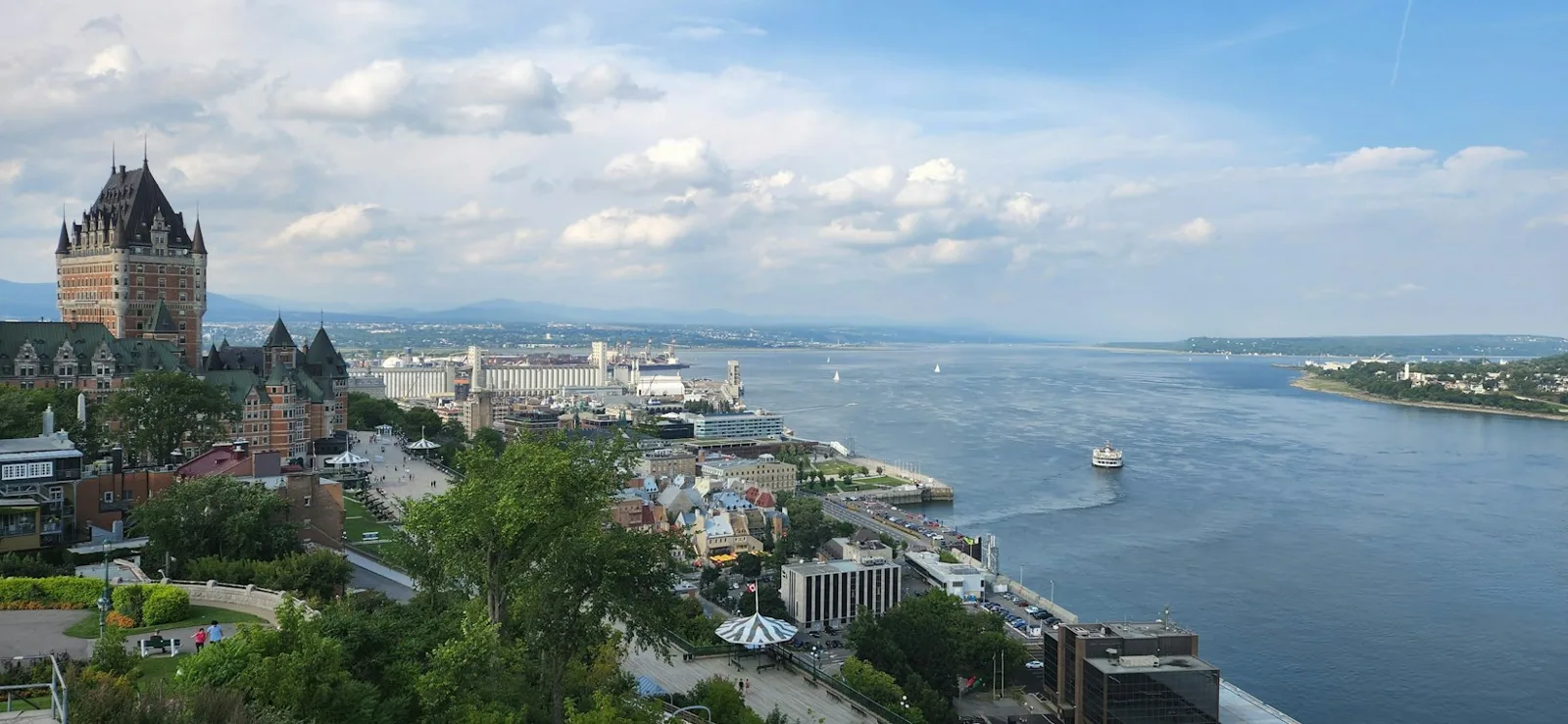
Old Québec above the St. Lawrence River. Photo credits
This Quebec City travel guide starts with a choice you’ll feel every day. Upper Town puts the château, the terrace and the fortifications on your doorstep. Lower Town puts Place Royale, the museum and the train station closer. Pick the level that works for your evenings and luggage, then visit the other level in a separate block. Allow two full days for Old Québec and one more if you want a slower outing to Montmorency Falls.
Choose a Québec City route
Upper Town and the terrace
Start at Place d’Armes, look out over the river and follow the walls toward a stop that fits your day.
Lower Town and the Old Port
Start at Place Royale, then choose Petit-Champlain, the waterfront and a museum when it suits the weather.
Montmorency Falls
Pick an entrance and one dependable viewpoint before deciding if you want the bridge, stairs or cable car.
Quebec City travel guide at a glance
| Your trip | A workable plan |
|---|---|
| First afternoon | Do one level of Old Québec after dropping bags. Start near the hotel and keep the first meal nearby. |
| Two full days | Use one for Upper Town and one for Lower Town, or do both levels on a fair day and use the second for a half-day outing. |
| Three days | Add Montmorency Falls or the Plains of Abraham and a different museum or neighbourhood. |
| No car | Book downtown lodging, compare station-to-hotel routes and plan the falls with RTC or a separate ride. |
| Winter | Use the clearest daylight for the river view, plan a warm stop and decide the route downhill ahead of time. |
Upper Town, from the château to the walls
Begin at Place d’Armes and walk out to Terrasse Dufferin. The river opens up quickly here, so use the terrace first when visibility is good. If it’s windy or you’re only in town for an afternoon, take in the view closest to the square and spend the next block inland. The route near the château is one of the easiest places to reorient yourself between stops. Terrasse Dufferin information
For a longer outing, choose a stretch of the fortifications or go toward the Plains of Abraham. Our Québec City attractions guide compares these with museums, neighbourhood walks and a ferry outing. Leave time for a bench, museum or dinner before adding another climb. Use the Parks Canada visit information if a tour or staffed site is the reason you’re going. Walking through the district and visiting a specific attraction follow different hours. Old Québec is a UNESCO World Heritage Site, and the walls help explain why the two levels feel like distinct places. UNESCO’s Historic District of Old Québec listing
Plan the hill and check the last 200 metres
The funicular connects the terrace and Petit-Champlain when it runs, but its wheelchair access is unavailable when snow is present. Do not rely on it as a winter step-free connection. Sidewalks and approaches still matter, and the last part of a hotel’s walk may include uneven paving. Review the city’s mobility guide and call the operator or hotel if you need to confirm a step-free route. Avoid asking everyone to follow an unknown downhill shortcut just because it’s shorter. Save an approach on each level and decide which final stretch you’re comfortable walking.
Lower Town in one walk
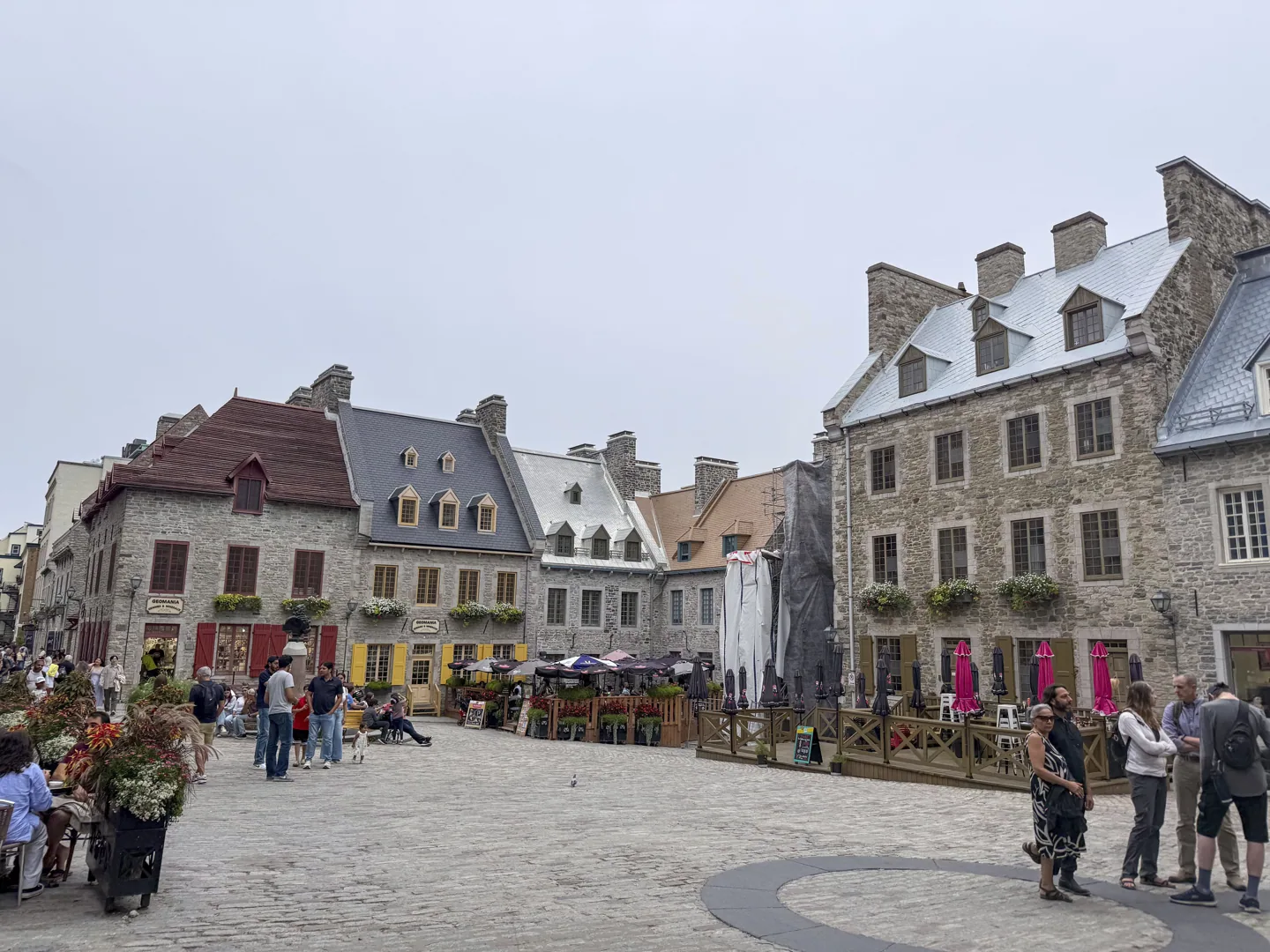
Use Place Royale as the meeting point. Take a little time in the square to look at the stone façades before walking the commercial streets toward Petit-Champlain. In busy periods, step off the main street for a short look around rather than forcing the group through the same stretch twice. The waterfront is a good ending when the weather is clear. Save the museum near the port for a long indoor block if it rains.
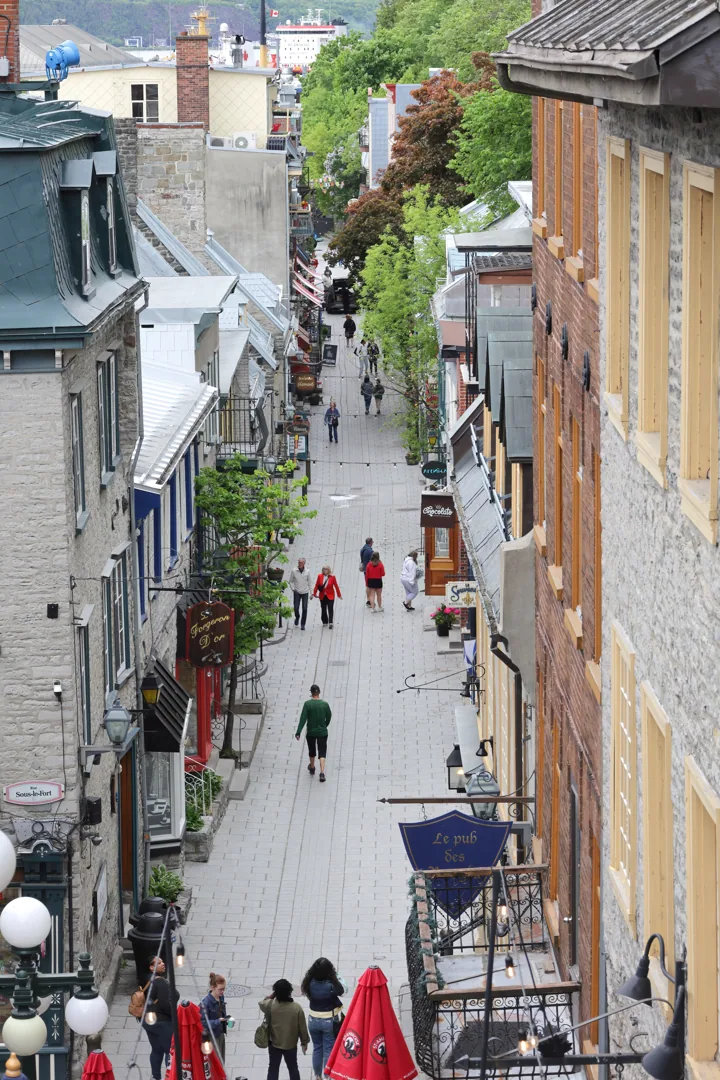
A route downhill can hide the effort of the return. Check the funicular’s operating information and whether each approach works for you. The operator says wheelchair access closes in winter when snow is present, even though the funicular itself operates year-round. If you need a step-free route in snow, stay on one level or arrange a suitable vehicle between levels, confirming pickup, return and access at both ends. If you’re short on time, choose your last stop based on where you want to finish rather than adding a return just to revisit the same viewpoint. If you’re ending at Gare du Palais, remember you’ll still need to collect any luggage from your hotel. Old Québec funicular · Musée de la civilisation hours and admission
Montmorency Falls and a third day
Treat Montmorency Falls as its own half-day plan with a return route. Our Montmorency Falls guide from Old Québec explains the bus stops, entrances and one-level options. The upper approach suits an outing by RTC bus if the route, stop and approach fit your visit. The lower entrance suits a direct ride for a view from below. Confirm park access, any extra services you want, and how you’ll return from your final level. In winter, Sépaq closes the east side at the foot of the falls, including the waterfall promenade and panoramic staircase. Plan an out-and-back to an open viewpoint and return from the same level; do not build the trip around crossing the closed stairs. Confirm the cable-car schedule separately before relying on it to change levels. Check Sépaq’s winter access guidance. Sépaq directions and access
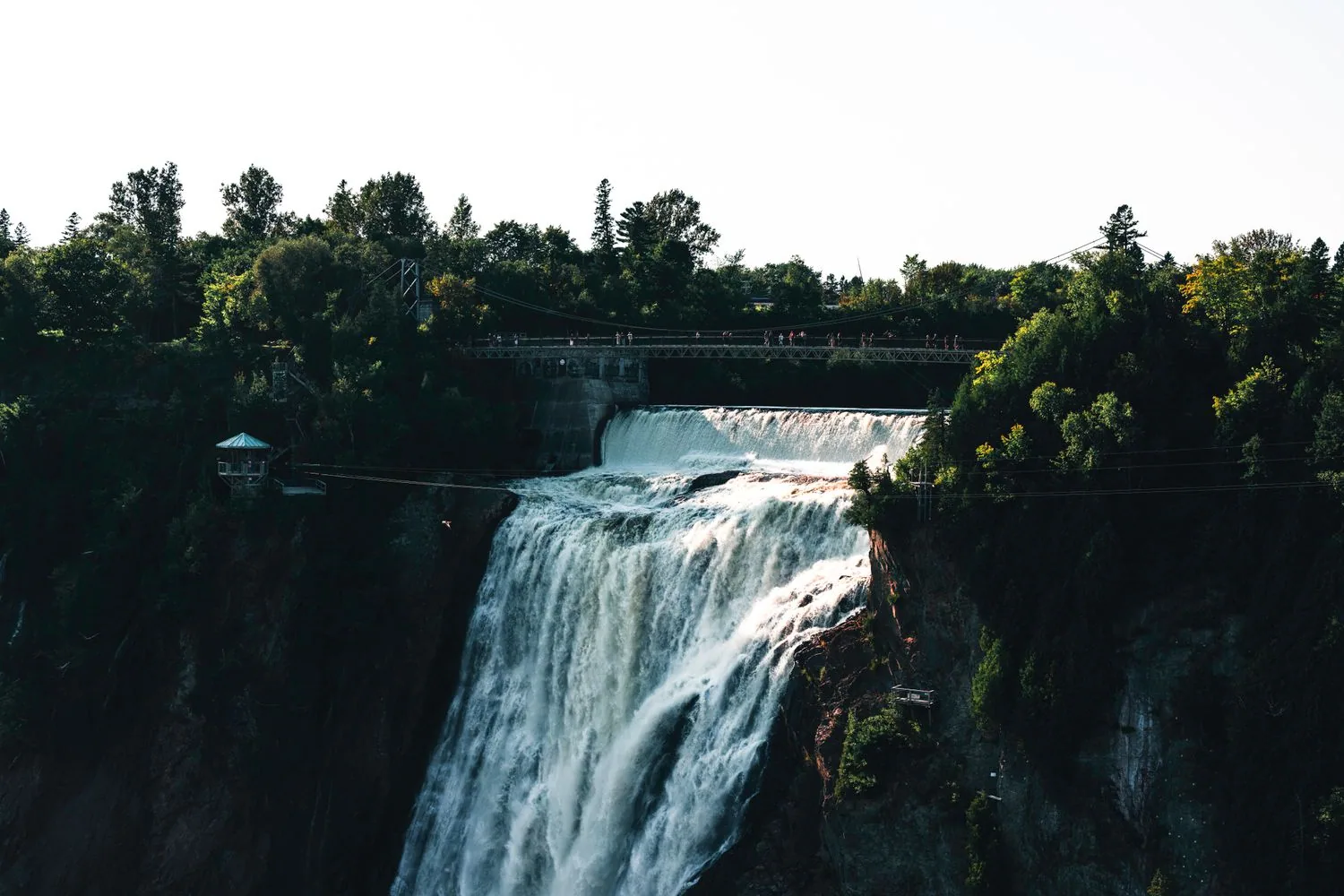
On a third day with poor weather, an indoor visit may be a better use of time than a park trip you can barely see. Pick a museum and a meal nearby. If you’re staying in Old Québec, Saint-Roch can give you a different area for dinner without committing your whole day to a trip out of town. Decide how you’ll get there and uphill again once it gets dark.
Where to stay in Québec City
Upper Town has the shortest walk to the château and terrace. It’s the practical choice for seeing the main sights after dinner or starting there before the crowds arrive. Check the walk from the station or arrange a ride if your bags are heavy. Lower Town suits visitors who want the river, museum, train and Place Royale close together. You’ll still climb or use transport to return from Upper Town. Saint-Roch can be a better fit for eating outside the historic centre, especially with a confirmed bus or taxi route back from your later plans.
Compare where to stay in Québec City, then look at the actual walk between the room and its most important destination. A historic staircase looks quick on a map but can make no sense with a stroller, suitcase or unstable footing. Ask the hotel about its entrance and help with bags if relevant. Choose your room according to the walk you’ll do at night, when fatigue can make a short uphill leg feel long.
Getting to Québec City and around
If you come by VIA Rail, choose Québec / Gare du Palais for Old Québec and the port. Sainte-Foy may suit a west-end hotel or an arranged pickup, so read the exact station name on your ticket. If you fly into Québec City, price the transfer to your particular hotel and have a backup for late arrivals. Travelling from Montréal? Compare station transfers in the Montréal to Québec City train guide. VIA Rail Montréal–Québec route · Visit Québec City transport information

For a city-only stay, walking is simplest when each outing stays mostly on one level. Use local transit or the funicular where they fit. For a day outside the centre, compare the actual pickup and return options before you book anything timed. The same thing applies to an airport or train departure: leave more margin if you need to stop for luggage on the way.
When to visit and what to book first
Summer makes long evening walks possible and tends to bring busier outdoor areas. For a first visit in cooler months, keep the scenic walk flexible and reserve the indoor activity you most care about. Winter can be ideal for the snowy streets when you choose a compact route and have time to warm up. Check events, closures and whether you need to plan around a holiday before deciding which hotel or train to reserve. For a cold-weather weekend, see Québec City in winter for sheltered stops on each side of the hill.
Book the hotel, arrival and departure before optional day trips. Next, settle the timed experience you travelled for. If Québec City is the last stop on a multi-city trip, the seven-day Eastern Canada itinerary by train shows how much sightseeing fits after arrival. Leave the rest loose enough to take advantage of daylight or a clear afternoon. If your trip continues west, the Canada itineraries index can help you plan the transfer days. If you’re stopping in the capital, use the two-day Ottawa itinerary to plan a separate city stay.
Pair Old Québec with a second city or a rural stop using the Québec province itineraries for three, five and seven nights.
If you’re adding Montréal, the Montréal first-visit guide helps you pick a neighbourhood and plan the Old Port and markets.
How to use two full days
Put Upper Town on the day with the best outlook for a river view. On the other day, give Lower Town a slow start around Place Royale, a walk through Petit-Champlain and an indoor block if that fits. Follow our two-day Québec City itinerary to compare routes before choosing a hotel. When a steep walk is a practical issue, spend both days within a short distance of your room at the start and finish, then use a separate vehicle transfer for the other level.
With a short last morning, take your luggage plan as seriously as your sightseeing plan. If you’ve already checked out, leave your bags somewhere you know you can retrieve them, then choose a compact walk with a clear turn-back point. Travellers starting in Lower Town can make the museum or waterfront the last visit. Anyone leaving from Upper Town should check the time needed to reach the station, even when the visible distance looks small.
Use this Quebec City travel guide to map the two levels
The view from Dufferin Terrace and the square at Place Royale are both close to Château Frontenac on a map. The useful question is how you’ll get between them. Do the Upper Town and Lower Town walks separately if anyone is carrying bags, slower on steep streets or travelling with wheels. If you do both on the same day, decide where to eat and where to finish before you descend.
Upper Town walk from Place d’Armes
Start at Place d’Armes and head onto the terrace for the river. Come back through the streets toward the cathedral area, then pick one of two endings. For the walls, continue toward Porte Saint-Jean and Place D’Youville. For a longer outing, go toward Porte Saint-Louis and the Plains of Abraham. Pick one end of the old town instead of walking to both if cold or wind is the concern. Give yourself time for a coffee or a sit-down lunch before making the descent to the river.
Lower Town walk from Place Royale
Start at Place Royale and walk to Rue du Petit-Champlain. Return toward Rue Dalhousie for the Musée de la civilisation or continue toward the Old Port if you want to stay outdoors. Let lunch determine where you take the longer break. Take the waterfront as an out-and-back so you can turn around before the wind or the walk back becomes tiring. For an indoor ending, choose the museum and save the open waterfront for a clear morning.
Meals that fit your side of Old Québec
Upper Town around Rue Saint-Jean
Use Paillard for a croissant and coffee before a short walk. It keeps breakfast close to the first places you’ll want to visit in Upper Town. For a meal you’re planning the evening around, Chez Boulay has a seasonal boreal menu. Choose it if you want to try ingredients from Québec in a sit-down meal and check the current menu for a specific dish before booking. A reservation on your hotel’s level makes the end of a cold or rainy day much simpler. Chez Boulay’s current menu
Lower Town around Rue Saint-Paul and Petit-Champlain
Try Buffet de l’Antiquaire near Rue Saint-Paul if you want a diner-style breakfast before the museum or the train. Le Lapin Sauté is a choice for someone who wants to try a rabbit dish while spending the day in Petit-Champlain. Look up its current menu and hours before going. With a short afternoon, choose a meal close to your next stop and use the saved time for the square and waterfront. A group with mixed interests can make Place Royale the meeting point after lunch.
Saint-Roch when dinner is the main plan
Saint-Roch works for an evening away from the historic streets. Choose it when you’ll have time to get there and when the walk or ride home makes sense for your group. Confirm where you’ll get picked up after dinner if you’re heading uphill or travelling with someone who tires by evening. If the road or sidewalk is in poor condition, move dinner closer to the hotel and give the neighbourhood a daylight outing instead.
One night, two nights or three
| Trip length | What to keep | What to leave flexible |
|---|---|---|
| One night | One level after arrival and the other the following morning if the transfer is easy. | Leave the falls optional. Book a hotel convenient for your arrival and next departure. |
| Two nights | One proper Upper Town visit and one Lower Town block with time indoors. | Put the waterfall outing on your best weather window if it fits without crowding out the city. |
| Three nights | Give the falls a half day and add the Plains, a museum or an evening in Saint-Roch. | Keep one morning free so a good forecast can set the order. |
A two-night stay that keeps checkout day simple
Give the first afternoon to the level where you’re sleeping. If your room is near Rue Saint-Jean, the terrace and a walk near the gates make a good starting loop. If you’re staying near the port, choose Place Royale and the waterfront. On your full day, do the other level before dinner and give the rest of the morning or afternoon to a museum or the falls if conditions suit. On checkout day, keep one repeat visit close to where your bags are stored.
An early train and a late train deserve different mornings
For an early departure from Gare du Palais, eat where you can get back to your bags easily and make the station your priority. For a late departure, choose Lower Town for the final walk if both the bags and the station are easy to reach. Ask the hotel when you can retrieve bags and whether there are stairs or a vehicle drop-off at the entrance. If your train says Sainte-Foy, budget for a separate transfer and look up the exact departure location.
Choose the day’s main cost before booking add-ons
A useful Quebec City travel guide should help you decide where to spend. Start with hotel location and train or airport transfer. Next decide whether the main paid stop is the museum, a guided historical visit, a meal or a trip to the falls. The terrace, streets and river viewpoints can fill a satisfying block by themselves. Put paid activities around the weather-independent anchor and give yourself time to use the ticket.
For a group trip, compare the cost and walking effort of a short ride between levels with the room price difference between Upper and Lower Town. If avoiding hills matters, the short ride can make both levels practical in one trip. Keep the rough budget in one place with your lodging and transfer notes, and check fares and operating hours directly before reserving.
Quebec City travel guide FAQs
How many days do first-time visitors need in Québec City?
Two full days cover the historic centre at a comfortable pace. Add a day for Montmorency Falls, a longer museum visit or a slower trip.
Should I stay in Upper Town or Lower Town?
Upper Town works for the terrace and the historic square. Lower Town works for the waterfront, Place Royale and the downtown train station.
Do you need a car in Old Québec?
The centre is easy to visit on foot in short routes. Choose public transit, a taxi or the funicular if a climb or transfer makes the walk impractical.
What is the best station for Old Québec?
Québec, also called Gare du Palais, is downtown near Lower Town. Check the ticket before boarding.
Can I visit Montmorency Falls from Québec City without a car?
Yes. Check RTC service to the upper approach or arrange a direct ride to your chosen entrance. Plan the return from the same level unless a connection is confirmed.
What should I do if it rains?
Pair Lower Town with the Musée de la civilisation when open, or choose one indoor stop on the stay’s current level. Save the best river viewpoint for the next clear window.
Photo credits
Old Québec above the St. Lawrence River · Parnika Kaushik · Unsplash License · resized and converted to WebP
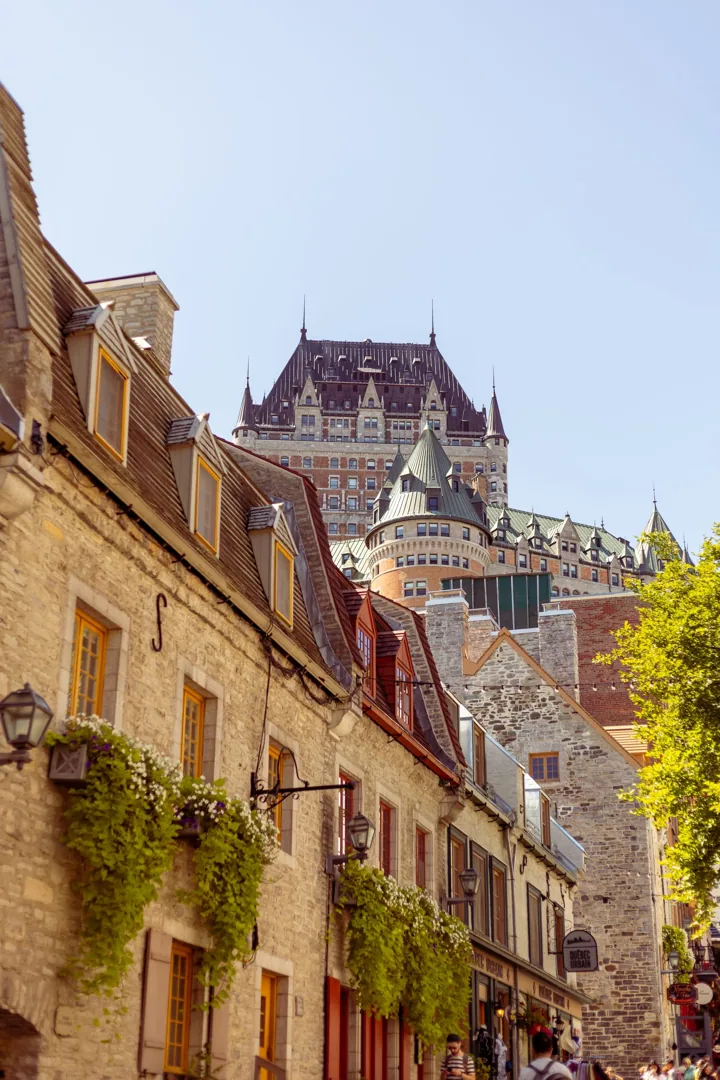
Upper Town is uphill from the Lower Town train station · David Montanari · Pexels License · resized and converted to WebP
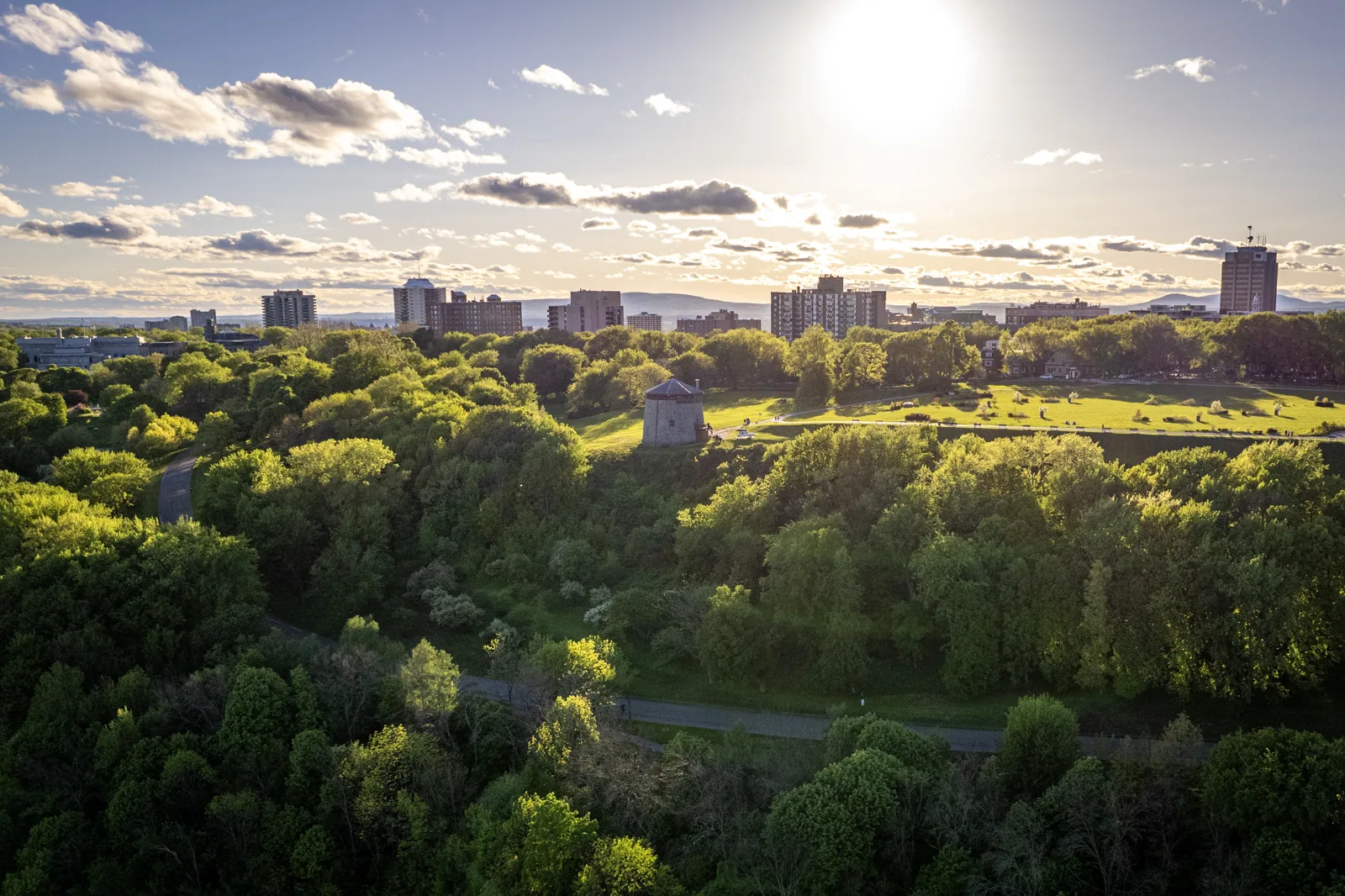
The Plains of Abraham give you room for a longer walk beyond the walls · Gabriel Picard · CC BY-SA 4.0 · resized and converted to WebP
Place Royale is a useful starting point for a Lower Town loop · Hayden Soloviev · CC BY 4.0 · resized and converted to WebP
Petit-Champlain is one part of Lower Town’s walking route · Cephas · CC BY-SA 4.0 · resized and converted to WebP
The suspension bridge above Montmorency Falls. Choose a viewpoint that fits the weather and your walking route · Ali Kazal · Pexels License · resized and converted to WebP
Gare du Palais is the downtown VIA Rail arrival for Old Québec · Wilfredor · CC0 1.0 · resized and converted to WebP