2 Days in Mont-Tremblant: Village, Lake and Seasonal Options
Plan your 2 days in Mont-Tremblant around the pedestrian village on day one and a different part of town on day two. For the second day, choose the older Village beside Lac Mercier, downtown Saint-Jovite, or a longer outdoor outing.
This itinerary is for a first visit with time to sit down for lunch, enjoy the scenery and change plans when the weather turns. It is not a two-day ski holiday disguised as a sightseeing trip. Skiers should replace a sightseeing day with a proper mountain day, rather than squeezing lessons and rentals between other stops.
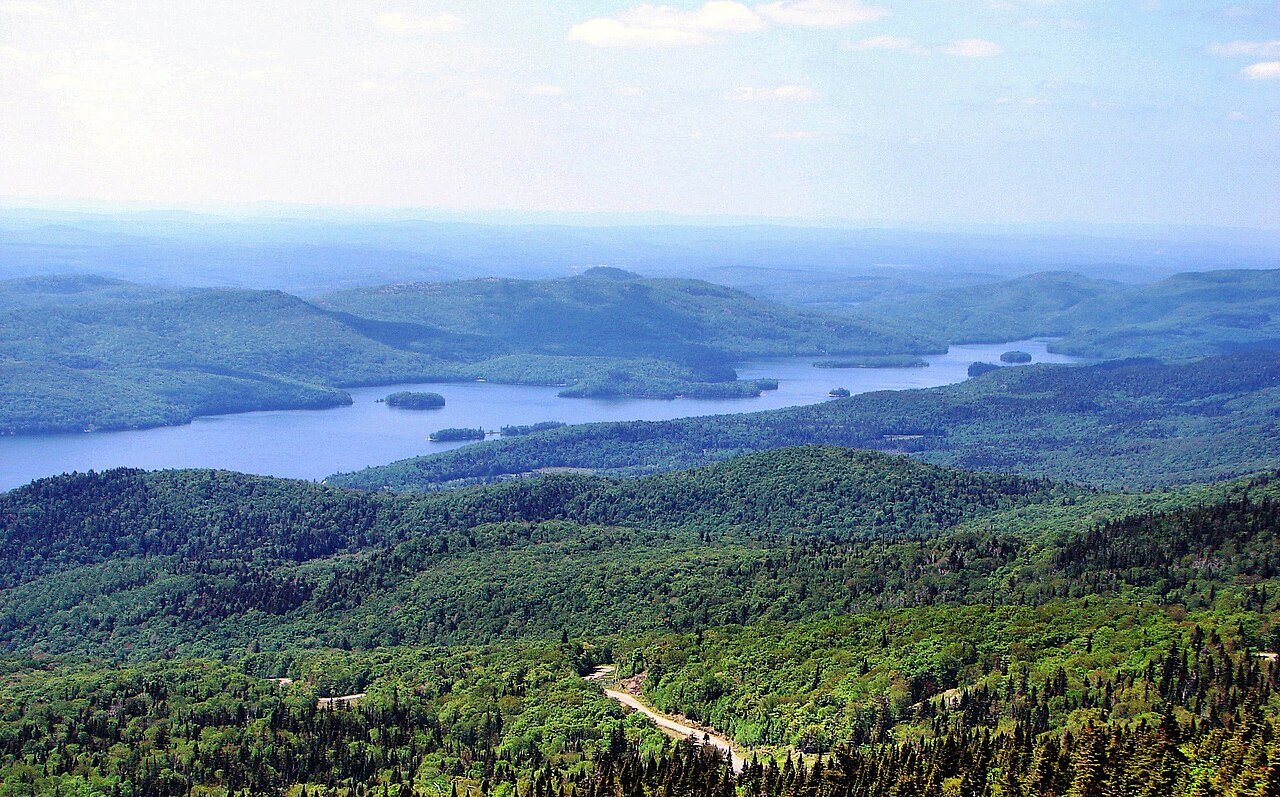
Start with the right Mont-Tremblant
There are three names worth sorting out before booking accommodation:
- Tremblant Resort’s pedestrian village: the colourful mountain-base streets, hotels and access to the summit gondola. Choose this for the simplest resort-focused stay.
- The Village near Lac Mercier: a separate older neighbourhood, not another name for the pedestrian village. It makes a useful second-day contrast.
- Downtown, also called Saint-Jovite: the town centre, with shops, restaurants and everyday services. A downtown address does not mean you can step out of your hotel at the ski lifts.
Tourisme Mont-Tremblant’s district overview helps put those names in context. Check the actual map pin of any hotel, especially when its listing simply says “Mont-Tremblant.”
For a two-night trip, arriving the evening before gives you two usable days. If you arrive on Saturday afternoon and leave Sunday after lunch, choose the village, one main activity and one meal out. Trying to complete every stop below would turn that shorter visit into a transfer schedule.
2 days in Mont-Tremblant at a glance
| Block | Suggested allowance | Plan |
|---|---|---|
| Day 1 village breakfast and orientation | 60–90 minutes | Lower village to Place Saint-Bernard |
| Day 1 mountain outing | 2–3 hours | Gondola, summit stop and return, if operating |
| Day 1 lunch | 45–75 minutes | Eat before the lake outing |
| Day 1 afternoon | 1–2 hours | Seasonal beach visit or chapel-area stroll |
| Day 1 dinner | 60–90 minutes | Near your accommodation or a confirmed return bus |
| Day 2 Village and Lac Mercier | 90 minutes–2 hours | Place de la Gare, café and local streets |
| Day 2 Saint-Jovite | 90 minutes–2 hours | Lunch and town-centre browsing before departure |
| Nature-day substitution | 3–5 hours on site | Domaine Saint-Bernard instead of both town visits |
These are suggested planning allowances, not measured journey times or operator timetables. Add transport, parking and longer holiday queues separately. Choose the lower end for a brief look, the higher end for meals, photographs or children’s breaks. Keep one spare hour each day; reserve at most one main paid activity.
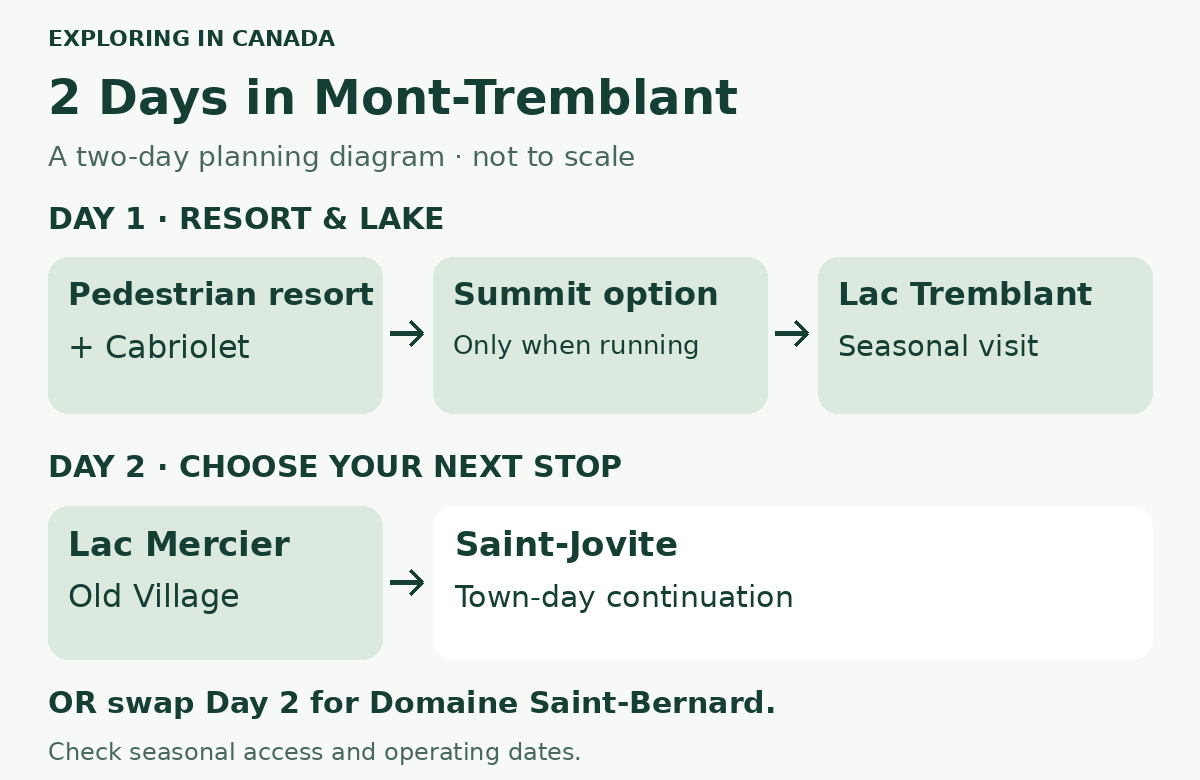
Day 1: pedestrian village, mountain and lake
Morning: explore before committing to the summit
Begin with breakfast in the lower pedestrian village, then work uphill towards Place Saint-Bernard. It is a useful named meeting point rather than a vague instruction to “explore the resort.” The Tremblant Activity Centre is at the foot of the slopes on the square, so you can clarify an activity’s meeting location before leaving for the summit. Allow 60–90 minutes for breakfast and this orientation, not a second cross-town excursion.
The Cabriolet links the lower and upper parts of the village. It is not the summit gondola. The resort’s Cabriolet information shows what it connects; check operation rather than assuming that every lift runs whenever shops are open.
For mountain views, consider the separate Panoramic Gondola. Buy for the correct date and check the operating report before heading to the entrance. A clear forecast is a reason to put this early in your day, not a guarantee of an unobstructed view. If the mountain is hidden in cloud, ask yourself whether the ride still feels worth the cost.
The operator’s gondola page publishes seasonal dates and ticket options. Operation is not continuous throughout the year, and a sightseeing ticket is not a ski pass. At the summit, choose only a walk appropriate to the open trails, conditions and your footwear; do not improvise a mountain descent to save the return fare.
Leave breathing room for queues, photographs and getting back down. A timed afternoon booking immediately after the mountain creates unnecessary pressure.
Lunch: keep it near the next stop
Return to the village for a 45–75-minute lunch before the lake. Check the complete menu price and leave time to collect swimwear or warmer layers from your room. This is also the natural decision point: after a long gondola queue, drop the afternoon activity rather than compressing lunch and the return journey.
Afternoon: choose the lake experience that is actually open
In swimming weather, Lac Tremblant Beach is one possible paid afternoon. It should not be confused with every public lakeside viewpoint or with another beach using “Tremblant” in its name. Read the beach operator’s access rules before setting out: admission also applies to non-swimmers, and the listed rules prohibit outside food, drinks and coolers.
That makes a difference to the plan. Eat your picnic elsewhere before entering, or budget for food available on site. Verify the current opening calendar and admission conditions instead of packing a beach afternoon into an autumn or winter visit.
For a shorter alternative, use Chapelle Saint-Bernard as a named lower-village landmark, following the current resort map rather than cutting through private hotel grounds. In winter, the resort outdoor rink is beside the chapel. Check its opening and rental arrangements before bringing skating into the plan; the location is verified, but usable ice is weather-dependent. An exterior chapel-area stop can fit into a relaxed afternoon without promising entry to the building. Budget 1–2 hours for the whole afternoon block, including a drink or rest, rather than treating this as a timed walking circuit.
Evening: dinner without a difficult journey back
Choose dinner near where you are sleeping, or decide the return journey before ordering. A free local bus is useful only if its timetable works for your evening. A restaurant booking should leave a comfortable margin before the last practical service, not depend on finishing dessert at exactly the right minute.
If you are driving between neighbourhoods, choose a designated driver. Do not assume a taxi will appear immediately at closing time; arrange the return in advance when it matters.
Day 2: older village and downtown, or a nature day
The straightforward version: Lac Mercier, then Saint-Jovite
Start the second morning at Place de la Gare, 1886 chemin du Village, in the older Village near Lac Mercier. The station-style exhibition building gives you a precise starting point for the neighbourhood. There is a small but worthwhile historical distinction: Québec’s heritage register identifies it as a 1998 replica of the former station, not the surviving original railway building. Check exhibition hours if you want to go inside; otherwise make it an exterior stop before a café break and the village streets.
Allow 90 minutes–2 hours here. Local tourism information places the Village beside the P’tit Train du Nord linear park. Extend your outing only on a section currently open for your activity: summer walking/cycling access does not establish winter pedestrian permission on a groomed trail. Do not walk onto Lac Mercier’s ice or assume the beach is open because a path reaches the lake.
Then move on to downtown Saint-Jovite for lunch and a town-centre browse. Allow another 90 minutes–2 hours, plus the transfer. If you have an early onward departure, make this lunch only or leave downtown for another visit; do not risk a booked return connection for one more stop.
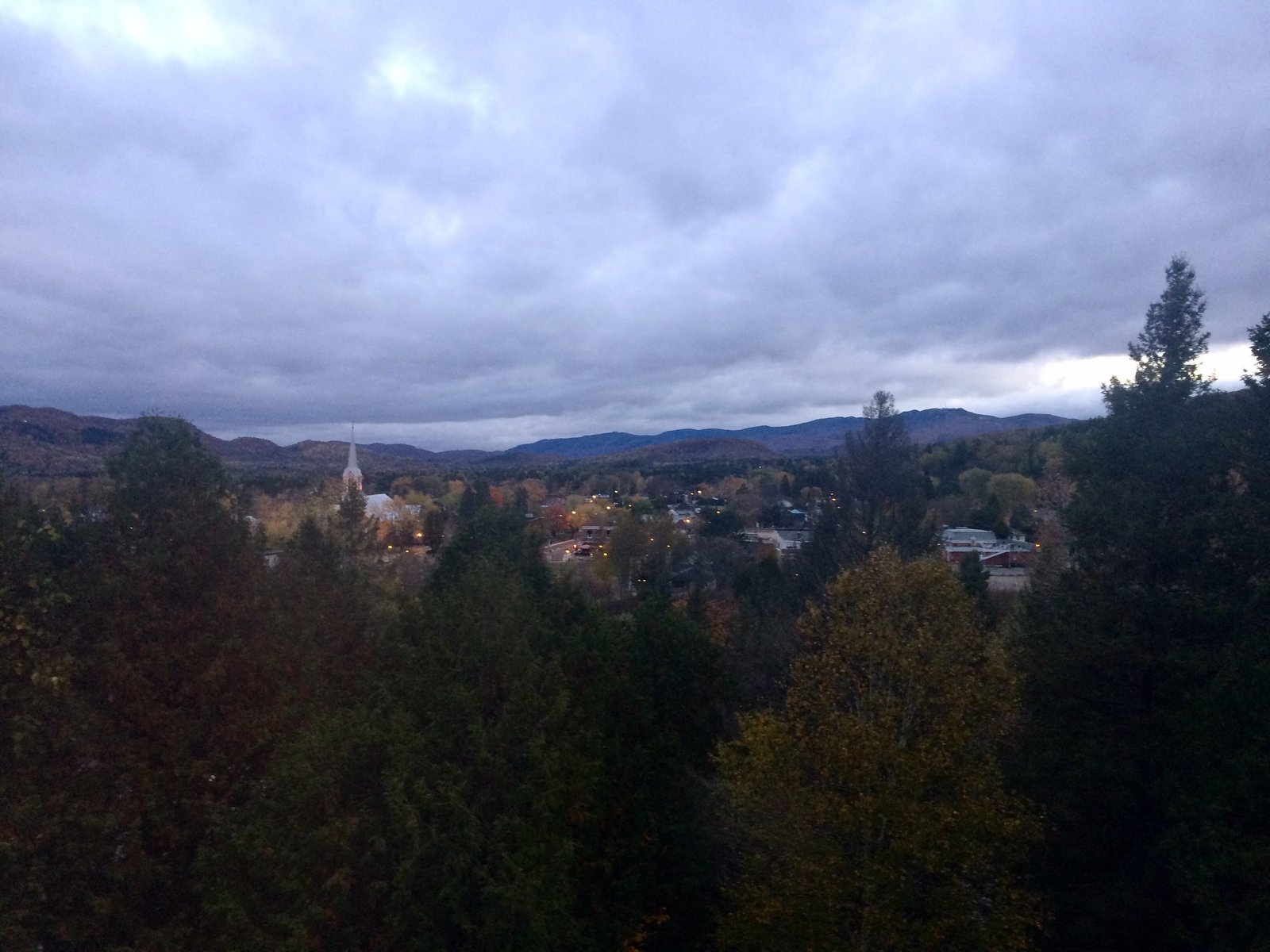
For a car-free stay, check both bus legs and the onward departure before leaving your hotel. If the connections leave only a rushed visit, choose either Lac Mercier or downtown. Two places enjoyed properly are better than three viewed through a bus window.
The outdoor alternative: Domaine Saint-Bernard
Prefer trails to another neighbourhood? Replace the morning and much of the afternoon with Domaine Saint-Bernard. Its activities change with the season, including walking and summer lake activities, or winter pursuits when conditions allow. Entry requires the applicable admission or valid access entitlement; it is not simply a free extension of the resort.
Use the Domaine’s visitor information and trail conditions before choosing a route. Closures can follow weather events. Pets are not generally admitted, so this is not the default option for a trip with a dog.
Allow 3–5 hours on site for one suitable trail outing, a rest and lunch, not a promise to complete the entire network. Arrange transport to the actual entrance rather than assuming the municipal bus drops you there. Without a confirmed return, stick to the village-and-downtown plan. Once outdoors, choose a turnaround time that leaves room for lunch, changing layers and the journey home. Add downtown only if there is genuinely time left.
Adapt the weekend to the season
Summer: choose one mountain outing and one lake or trail outing. Keep sun protection and a rain layer accessible, and verify swimming supervision and rental hours. A photograph of an open beach is not evidence that it is operating on your dates.
Autumn: put scenery first but keep expectations flexible. Leaf colour varies with the year and location; no single weekend guarantees peak colour. Check the last operating dates of summer attractions before paying for accommodation around a specific activity.
Winter: decide whether this is a skiing trip or a sightseeing trip. Lessons, equipment fitting and lift access deserve their own block of time. Non-skiers can still plan a village-based stay, but should check suitable pedestrian activities rather than wandering onto ski runs. Warm footwear and spare dry layers matter more than fitting in another stop.
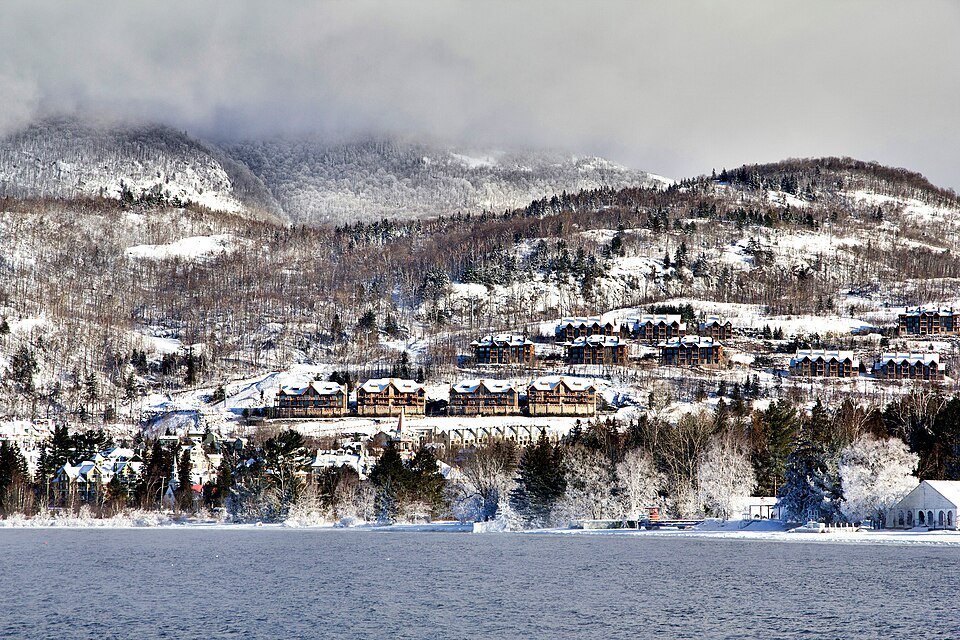
Spring and late-autumn gaps: confirm your anchor activity before booking a non-refundable stay. A quieter village can be appealing, but “open resort” does not mean every gondola, rental counter and restaurant is operating.
Rain, sold-out tickets and practical costs
If wind closes a lift or heavy weather closes trails, do not replace it with another exposed outing. Make the day smaller: breakfast, a leisurely meal, shops and time at your accommodation. If an indoor facility is important to your backup plan, check that you are actually entitled to use it; a hotel pool is not automatically open to non-guests.
When a preferred activity is sold out, keep the rest of the itinerary and remove that activity rather than buying an expensive substitute in a hurry. Check refund and weather-cancellation terms before purchasing. Those terms matter more than a small headline discount.
For budgeting, separate accommodation, transport, meals, parking and paid activities. Check the final checkout total for taxes and any additional charges. This guide does not assume that hotel parking, breakfast, beach admission or sightseeing tickets are included in a room rate.
Do you need a car?
You can enjoy 2 days in Mont-Tremblant without a car if you plan around the resort and town bus connections. The resort’s transportation information confirms free municipal transit linking downtown, the Lac Mercier Village and Tremblant Resort. Check current stops and timetables for your accommodation; the existence of a service does not guarantee a convenient late-night connection.
A car is more useful for a rural chalet or an independent outdoor outing away from that corridor. It also brings parking logistics and seasonal driving conditions. Book the accommodation location and transport together, rather than finding a bargain room first and solving access afterwards.
For a longer provincial trip, use our Québec travel guide to choose the next region. If Montréal is your city stop before or after the mountains, our Montréal guide keeps those city plans separate from this weekend.
Frequently asked questions
Is 2 days in Mont-Tremblant enough?
Yes, for the resort village, one substantial activity and a second neighbourhood or nature outing. Allow more time if you want several ski days or multiple outdoor destinations.
Is downtown Mont-Tremblant the pedestrian village?
No. Downtown Saint-Jovite, the Village near Lac Mercier and Tremblant Resort are distinct areas. Verify your accommodation’s address rather than relying on the town name alone.
Can you ride the gondola all year?
Do not assume so. The operator publishes separate seasonal calendars, with gaps possible between them. Check your date, weather conditions and the last permitted return before buying.
Is the national park included in this itinerary?
No. Parc national du Mont-Tremblant is a separate outing with its own access arrangements. Replace a day with a properly planned park visit rather than treating it as a short walk from the pedestrian village.
What is the simplest version without a car?
Stay near the pedestrian village, spend one day there and use a confirmed municipal bus connection for either Lac Mercier or Saint-Jovite on day two. Keep the final afternoon simple if you have an onward departure.
Keep planning your Québec trip
Add time in Montréal
Plan the city portion before or after your mountain stay.
Build a wider Québec trip
Compare first-visit routes before adding another region.
About this guide
This planning guide is published by Exploring In Canada. Seasonal operations, transport services and booking conditions can change. Check the operator links for your travel date. Visit and travel allowances are planning estimates, not guaranteed journey times.
Meet Shiva, the editor of Exploring In Canada. If a detail has changed, send a correction with your travel date.
Photo credits
Northern Lac Tremblant · P199; contrast edit by Jeangagnon · CC BY-SA 3.0.
Saint-Jovite · Andre Carrotflower · CC BY-SA 4.0.
Mont Tremblant in winter · Artur Staszewski · CC BY-SA 2.0.
Two-day planning diagram · Exploring In Canada.