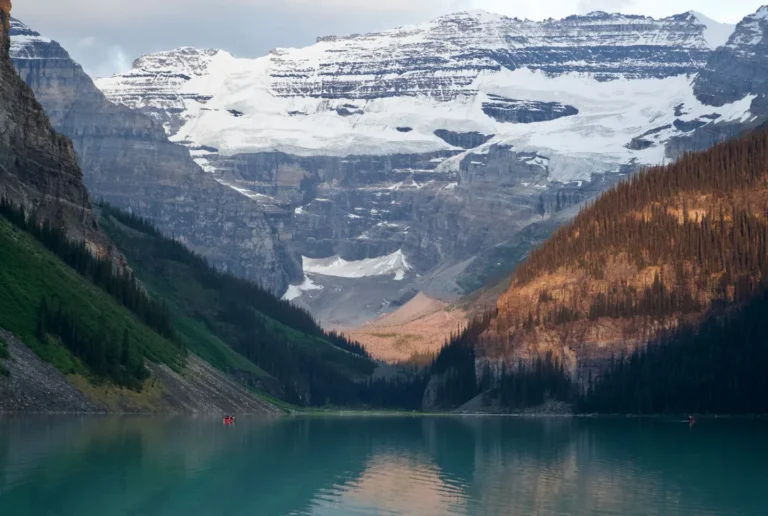
Things to Do in Banff: Town Walks, Lakes and Rainy-Day Stops
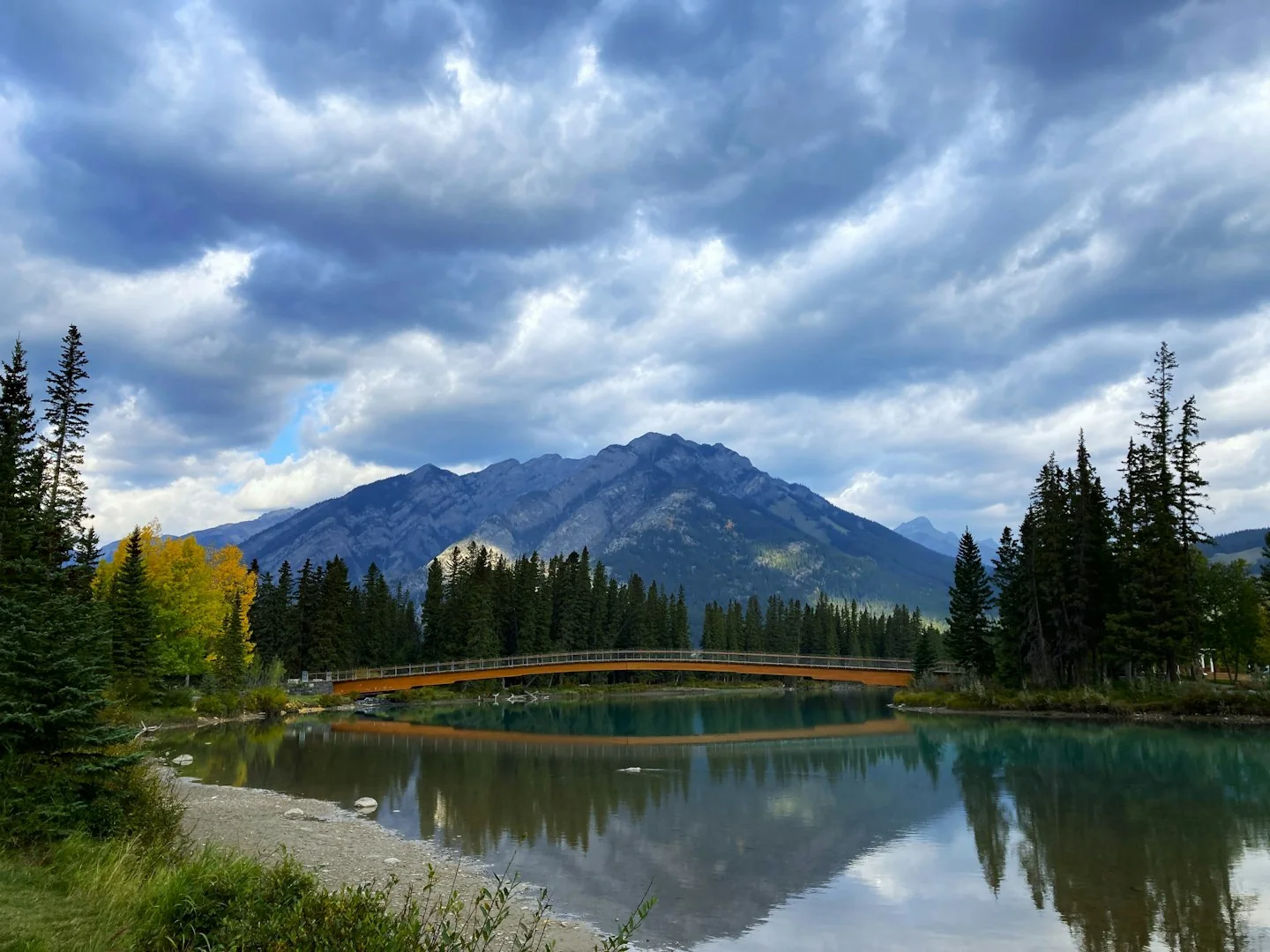
If you’ve just checked in, walk down to Central Park and follow the Bow River. It’s a better first hour than sitting in traffic on the way to a lake. Save Lake Louise for a day when you have time to get there and a confirmed way back. If the weather closes in, head to The Whyte on Bear Street rather than paying for a summit you can’t see.
What fits the time you have?
For a half-day in town, pair a river walk with lunch or a museum. For a day at the lakes, choose between time at Lake Louise and a quicker look at two lakes. On a wet day, check which museums are open before leaving town. The two sample itineraries show how to put those choices together. You can also jump to where to stay in Banff.
Some booking links below are affiliate links. Exploring In Canada may earn a commission if you book through them. Read our disclosure.
1. Walk the Bow River from Central Park to the Fenland Trail junction
Start at Central Park at the south end of downtown, near the Bow River and Banff Park Museum. Stay on the town side of the river and follow the riverside trail northwest towards the Fenland Trail junction. Use the junction as your turnaround and come back the way you came. The Town of Banff puts this leg at 900 metres each way. Budget 20–30 minutes for the walking alone, or 35–50 minutes if you’re stopping for photos, using the benches or letting younger travellers set the pace.
You can step off Banff Avenue, get down to the water and be back in town without arranging a ride. The path is mostly paved, and the town identifies the stretch from the Muskrat Street access northwest as wheelchair-friendly. If a smooth route is a priority, use that access and check the current surface before setting out. Snow, ice and maintenance can change even a normally straightforward path. For a shorter outing, pick a bench with a river view as the turnaround instead of treating the junction as a requirement.
Central Park makes a useful meeting point because there are washrooms, picnic tables and a playground. If one person wants coffee, one wants photos and someone else needs a break, agree to meet back at the park. This walk fits a late arrival, a gap before check-in or a morning when you want to see what the weather is doing before buying an attraction ticket. It also makes sense on an overcast day, when the river and near shoreline can still hold your attention even if the high peaks are obscured.
A guided ride along the river
For a different way to see the valley, compare the short Bow River or Spray River ride. Check the route, rider requirements and meeting point for your dates.
See horseback ride options on Viator2. Take the south-bank trail to Bow Falls
Bow Falls is a separate walk from the Fenland outing. From Central Park, cross the Nancy Pauw Bridge, turn left on the south side and follow the signed pedestrian trail downstream. Expect a dirt path and a wooden staircase approaching the falls section. Use the foot of the stairs as a turnaround if you want a shorter, gentler walk. If the full route is open and the footing suits everyone, carry on to the falls viewpoint and return on the same bank.
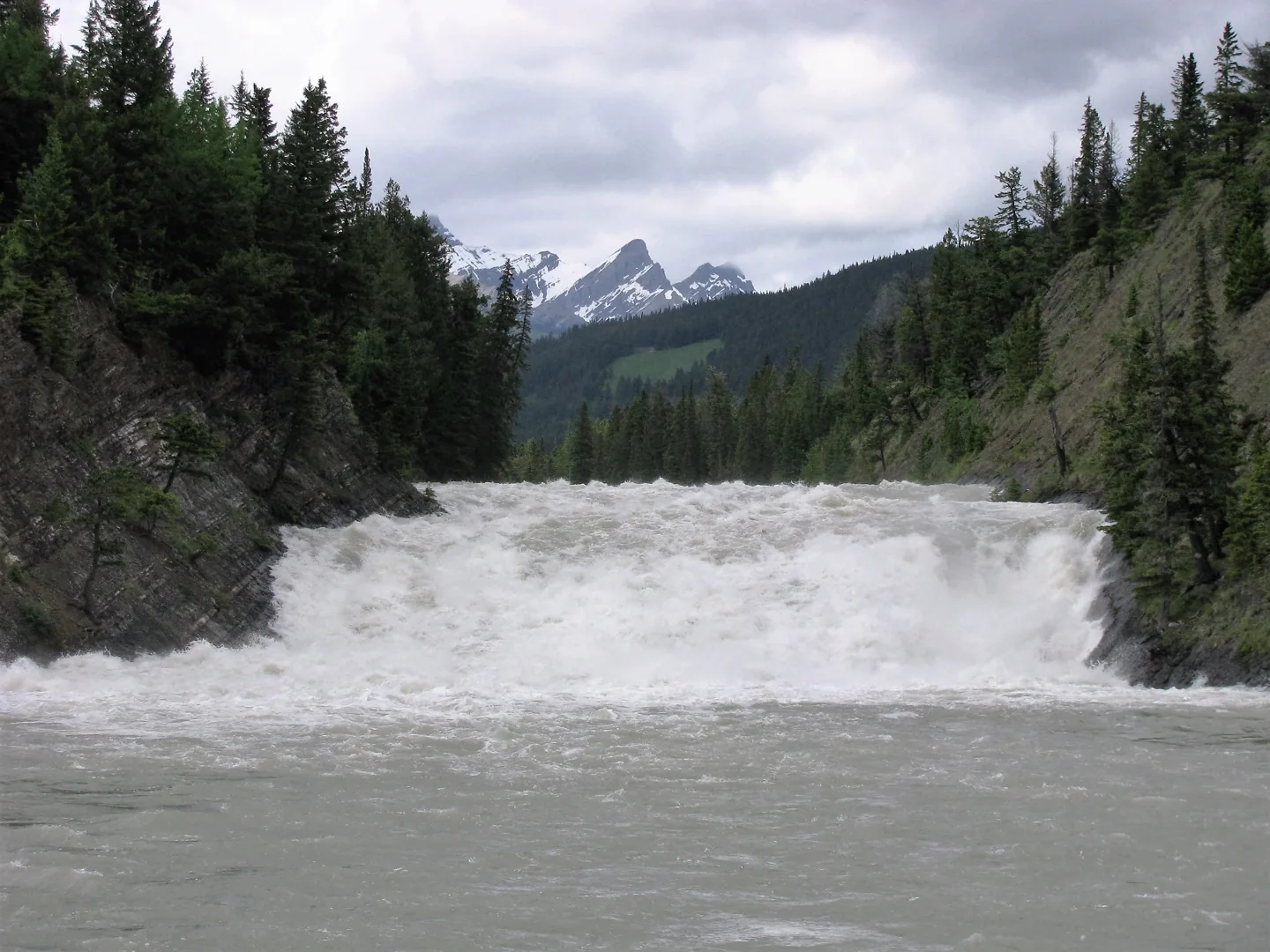
Allow about an hour of walking return from Central Park and add another 10–20 minutes for the viewpoint. The town’s one-way estimate of 20–25 minutes starts at Bow River Bridge, so the two timings use different starting points. The clifftop portion closes in winter. When the closure is in place, make the open riverside stretch the outing and follow posted signs.
Choose Bow Falls when your group wants a clear destination and everyone is comfortable with stairs or uneven surfaces. Choose Fenland when you want something flatter, need to stay close to town or are working around a restaurant reservation or bus. If you’re meeting someone at the falls, share the exact pin. Bow Glacier Falls is a different destination and a very different day.
3. Give Lake Louise its own lakeshore outing
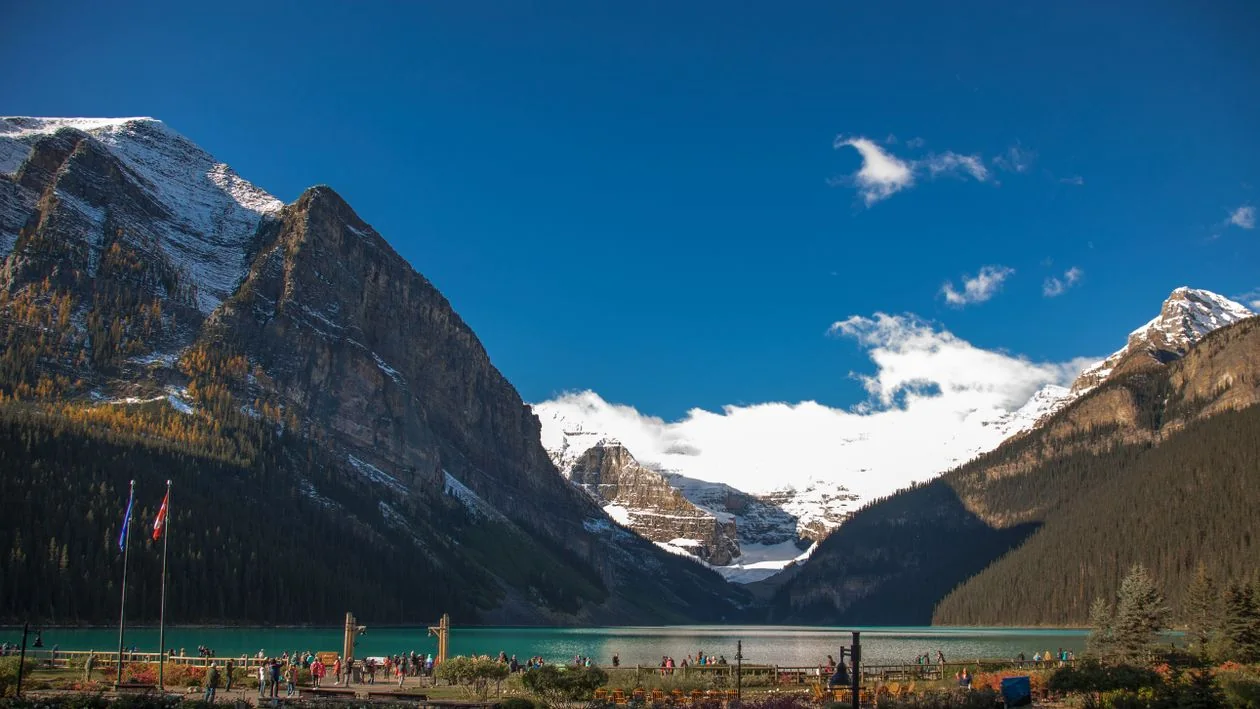
Book or navigate to Lake Louise Lakeshore for the waterfront beside the Château. Lake Louise Village is a separate stop down the road, about 4 km away. This matters on both legs of the trip. Booking the wrong stop can create an extra transfer, and arrival at the right stop doesn’t automatically confirm where your return boards.
From town without a car, take Roam Route 8X from the Banff High School Transit Hub. It runs year-round. Reserve a return that gives you enough time at the lake, save both tickets and check the boarding instructions. For fall and winter reservations, Roam asks groups to be at the hub at least 20 minutes early. A walk-up place depends on capacity, so try it only if you have time to wait for a later bus. If you’re driving, compare designated parking and any park-and-ride service available for your dates before setting off.
At the lakeshore, start near the front of the Château and follow the path along the water towards the inlet. Parks Canada lists the full lakeshore walk at 2.3 km each way. Allow around 60–90 minutes for a return with stops, or turn around after 15–25 minutes if the point of the visit is a quiet walk. The view changes as you get away from the front of the lake. A short stretch gives you more room to stop and look back without making the itinerary depend on everyone finishing 4.6 km.
In winter, the lake can be frozen and the mountain backdrop can come and go as the cloud moves. Choose a turnaround that keeps you on the signed visitor route. Treat the far end as a boundary and follow Parks Canada signage, as routes beyond the lake can enter avalanche terrain. Enjoy the frozen lake from an approved route and check local guidance for winter activities.
Time to leave. Give Lake Louise at least half a day from Banff and use a wider window if you want the full walk and lunch. Count boarding time, the ride, the walk back to the pickup and time for a food break. Pack something you can eat outdoors if you’re travelling on a fixed return. A sit-down lunch works best when you have the flexibility to wait.
Our Lake Louise parking and shuttle guide goes deeper on public transit, the park-and-ride and driving.
4. Add Moraine Lake when your ticket covers the whole trip
Moraine Lake is a different outing from Lake Louise, even though the two work well together when transport lines up. Moraine Lake Road is closed to personal vehicles year-round, with limited exceptions, including eligible accessibility parking permit holders and registered lodge guests. For most visitors the practical choices are a seasonal shuttle or a tour with access. A regular 8X ticket to Lake Louise stops there. When the seasonal Lake Connector is running, compare the Roam Super Pass or a Parks Canada shuttle reservation that includes the connection. For a seasonal connector, confirm that your ticket covers it, where you transfer and how you get back to your starting point.
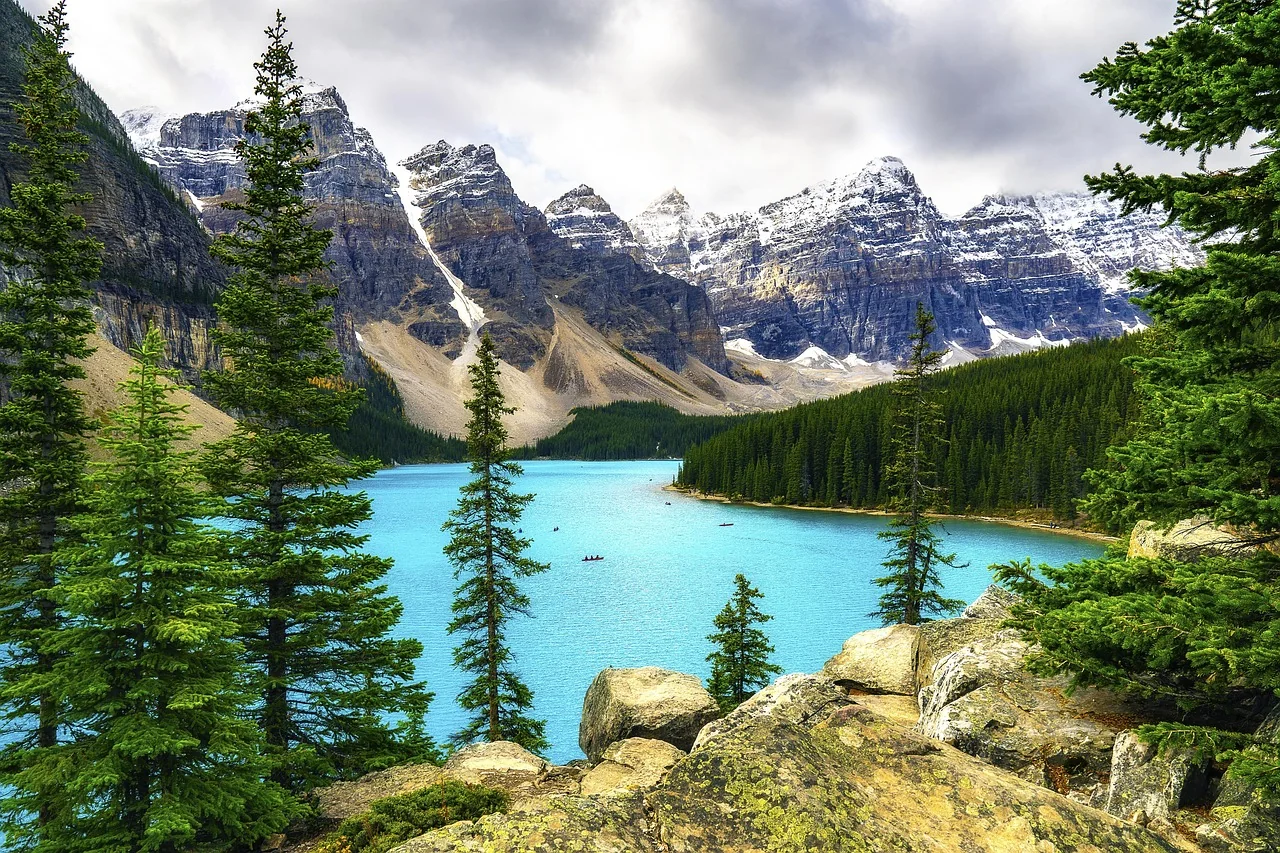
2027 shuttle bookings. Parks Canada lists Thursday, April 15, 2027 at 8 a.m. Alberta time for the Lake Louise and Moraine Lake shuttle reservation launch. That’s when booking opens, not when buses start running. The lake-access page still shows last season’s timetable; check the 2027 operating dates and connector rules before locking in a trip.
If you have only a short stop, you can get a view of the Ten Peaks from the shore without climbing the Rockpile. The 700-metre Rockpile loop takes about 30 minutes and involves an uphill path and steps. Leave it optional for anyone with limited time or mobility. On a tour with a fixed stop, work back from pickup. Walk to the first viewpoint and then decide whether you have time to go farther and still be back early.
When tickets for both lakes don’t line up, keep the Lake Louise booking. Walk farther along the lakeshore or take a longer lunch. Lake Minnewanka makes an alternative on another day if seasonal transit works. Walking up Moraine Lake Road adds a long approach and an uncertain return to a day you can make simpler.
Book a ride to both lakes
Viator lists a seasonal shuttle with a downtown Banff meeting point and roughly an hour at each lake. Compare it with the public shuttle if you want more time to walk. Check the pickup, return and inclusions before booking. Compare the two-lake shuttle on Viator.
Lake Louise, Moraine Lake or Lake Minnewanka?
Swipe sideways to see all columns.
| Lake | Time from Banff | Without a car | Cost and booking |
|---|---|---|---|
| Lake Louise | Half a day minimum. Allow longer for the full lakeshore walk and lunch. | Roam 8X to Lakeshore runs year-round. Check stops in both directions. | Transit or parking can add cost. Walking the lakeshore has no separate attraction ticket. |
| Moraine Lake | Half a day on a suitable service or a full day with Lake Louise. | Seasonal shuttle or tour. Verify pickup, fare and return coverage. | Book the transport for your dates. Parks Canada reservations launch April 15, 2027. Check operating dates separately. |
| Lake Minnewanka | About 2–3 hours for an easy visit when return times fit. | Roam Route 6 in season. Planned return May 19, 2027. | Seasonal bus fare. The shore walk has no separate attraction ticket. The cruise costs extra. |
More time at Moraine Lake. The two-lake shuttle is for seeing both shores; the longer Moraine Lake outing is for people who would rather spend several hours at one lake. The operator lists about four hours at Moraine Lake, with pickup options in Banff and Canmore. Verify your exact pickup, return, seasonal dates and child restrictions before choosing it. Lunch and canoe rentals are separate. Compare the longer Moraine Lake outing on GetYourGuide.
5. Use a clear weather window for the Banff Gondola
Give the gondola the best visibility window you have if views are what you’re paying for. The lower terminal is on Sulphur Mountain and Roam Route 1 serves the base. The cabin ride takes about eight minutes each way. Set aside roughly two to three hours from town for the trip, allowing for boarding, time at the summit and transport back.
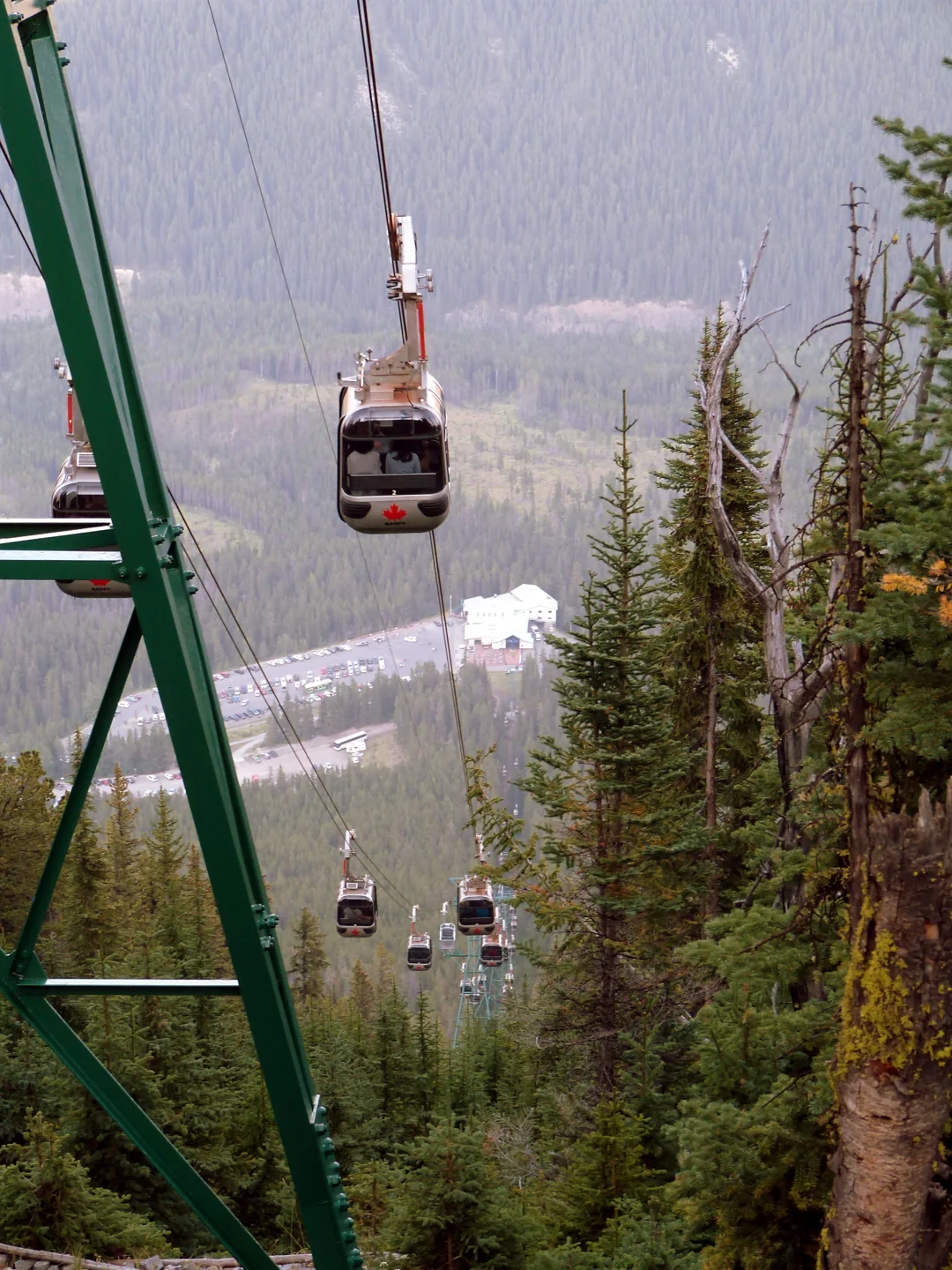
Look at conditions at the summit before paying for a same-day visit, especially if downtown is grey. The summit has indoor space and outdoor viewing areas. If people in your group mainly want the panorama, ask how they’d feel about spending the same amount when the peaks are hidden. If the weather is good, step outside shortly after arriving and take advantage of the visibility. The indoor exhibits and a warm break will still be there if the wind picks up.
The summit building has elevators, but the boardwalk to Sanson’s Peak is a separate walk with stairs in both directions. If stairs aren’t an option, use the viewpoints at the upper terminal. If you’re bringing a mobility device, confirm cabin dimensions and boarding with Pursuit before booking. On a cold day, bring an extra layer you can put on before leaving the building.
Before choosing a ticket, compare the total price for your group, the assigned time, refund terms and transport to the lower terminal. If cloud is closing in and cancellation terms are strict, The Whyte is a downtown alternative. Its location gives you room to wait over coffee and see whether a later weather window opens.
Banff Gondola tickets
The Viator listing covers the round-trip ride. Getting to the base and meals are separate. Compare the total and cancellation terms with the direct ticket for your date. See gondola tickets on Viator.
If you already plan to take the gondola and the Lake Minnewanka cruise, compare the two-attraction pass on Viator. Check dates for both experiences before committing.
6. See the Rockies through art and photography at The Whyte
Start here when the weather turns and you want an indoor stop close to the river. The Whyte is on Bear Street downtown, about five minutes on foot from Central Park at an easy pace. Allow roughly 45–75 minutes for the galleries. A timed heritage or guided tour is a separate choice, and some tours use outdoor spaces or historic buildings. Check which collection or exhibition is open before going for something specific.
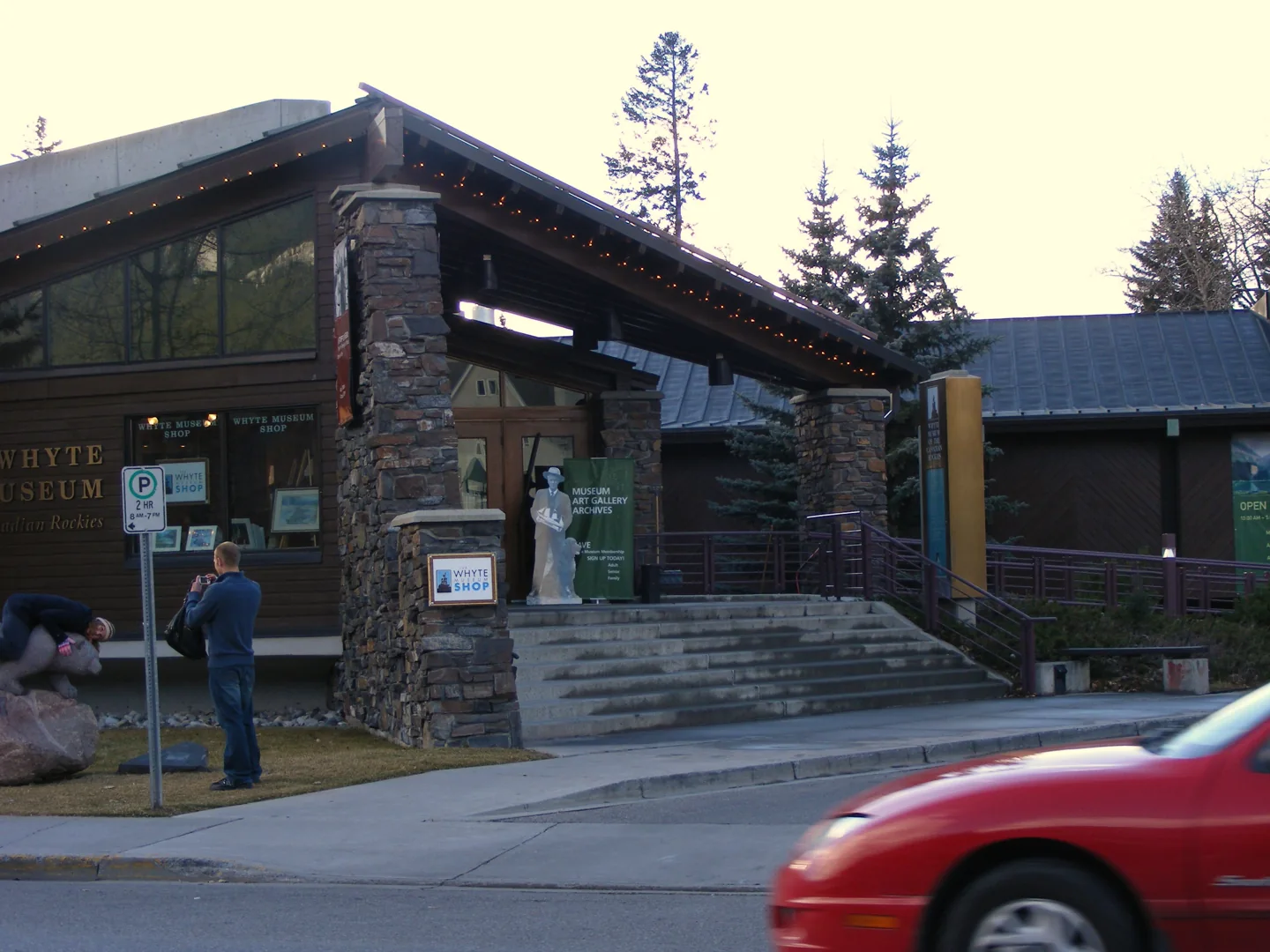
The exhibitions put people, art and stories back into a trip that can easily become a series of landscapes. If you have a limited window, pick one exhibition to give your full attention and see how its depiction of the mountains compares with the places you’ve been looking at outside. That’s a good use of an hour even when rain clears sooner than expected. If the gallery schedule changes, the rest of downtown is within an easy walk.
At the November 25 check, The Whyte listed regular hours of 10 a.m. to 5 p.m. daily, with holiday closures including December 24–26 and January 1. Standard admission was listed at $15 for adults, $12.50 for seniors and students, and free for youth under 17. Check the current visit page for special hours, admission and exhibition changes. On a grey day, this is the more dependable choice for people who want to spend their time indoors.
7. Learn how the park began at Cave and Basin
Cave and Basin National Historic Site sits at 311 Cave Avenue, around 2 km from downtown. If walking works for your group, leave roughly 30 minutes each way from the town centre. Leave another 60–90 minutes for the visit itself, especially if you’re making time for the indoor interpretation and the outdoor areas. Check seasonal transit before assuming there’s a bus to shorten the approach.
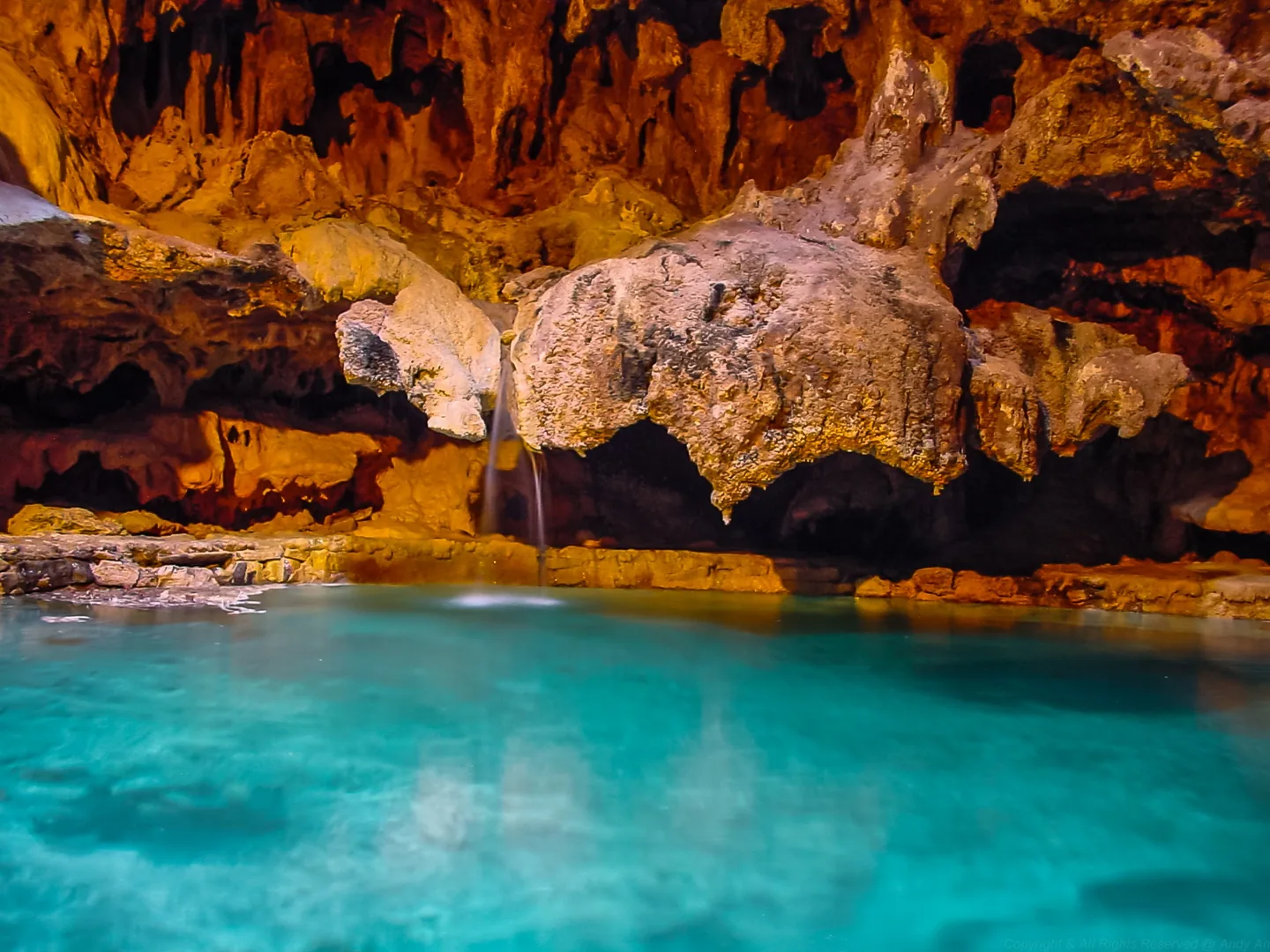
The thermal spring and the site’s interpretation make this a different visit from The Whyte. Begin with the exhibits and film when it’s raining. If the weather eases and the paths are open, add the outdoor portions. Anyone looking for a soak should look up the separately operated Banff Upper Hot Springs and verify its availability for their dates.
Regular winter hours for Cave and Basin are Thursday through Monday, 11 a.m. to 5 p.m., with dated exceptions. It is usually open daily in the main summer season. A rainy Tuesday in winter calls for a different plan. For groups that need consistent surfaces or shorter walking, check the accessibility information and choose the specific areas before committing. On a wet day, count the walk there and back as outdoor time.
8. Add Banff Park Museum when it’s open
Banff Park Museum stands beside Central Park at 91 Banff Avenue. The historic interior and its natural-history collections are the point of this stop. Expect preserved specimens and period displays. It’s a good fit for a short visit where you can make time for a few cases and notice how the collections were presented. Allow about 30–45 minutes. The location makes it easy to visit before a riverside walk or right after one.
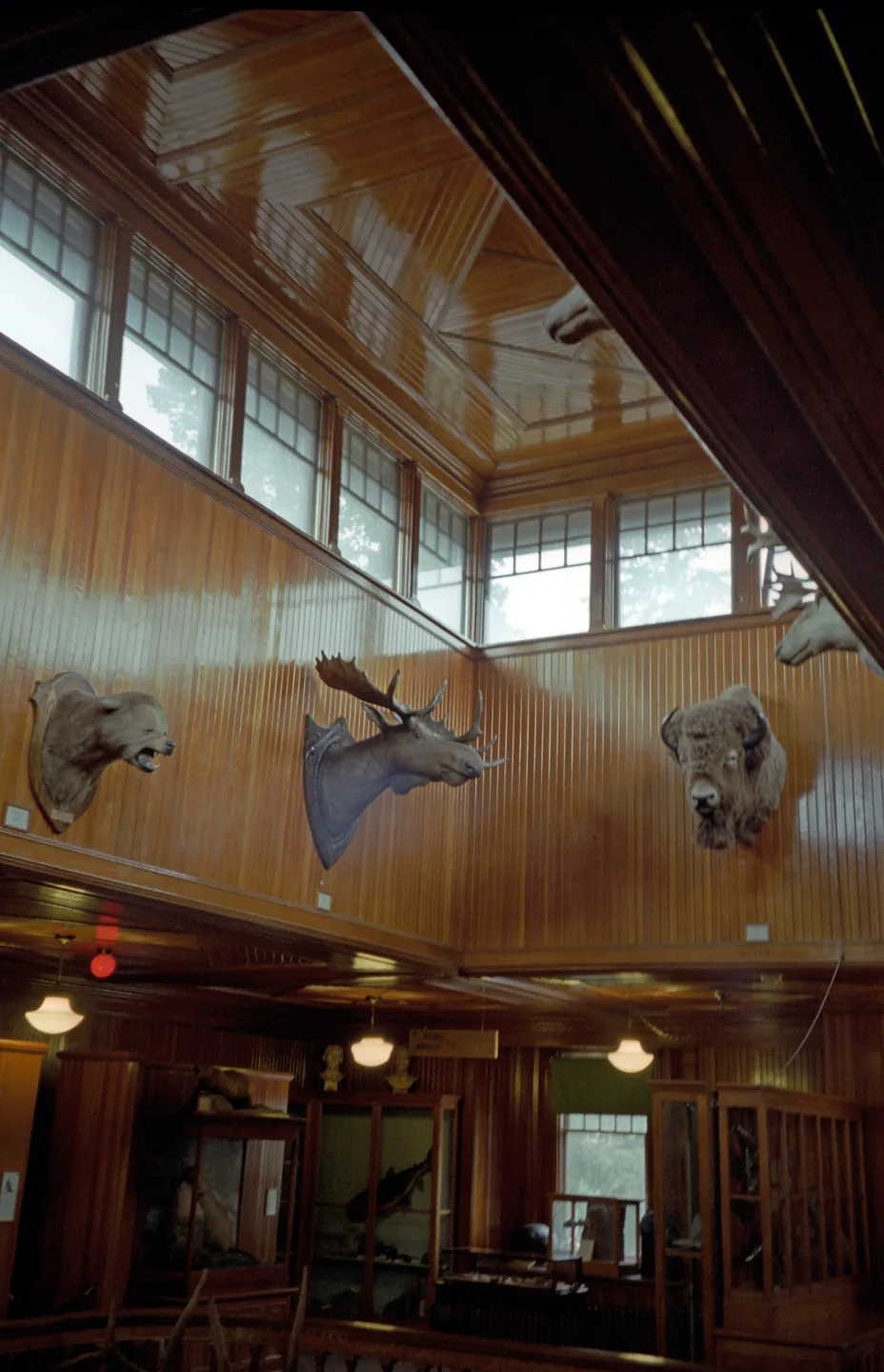
At the time of review, Parks Canada listed the museum as closed from October 16 through May 14, with regular operating hours Thursday to Monday from May 15 through October 15. That makes it a useful warm-season rain fallback and a poor anchor for a November itinerary. If it’s closed, move to The Whyte for an indoor stop or use the time for the river if the rain has let up.
If deciding between museums, choose based on the subject your group is most likely to remember. Banff Park Museum suits someone curious about animals and the building itself. The Whyte suits readers who want regional art, photographs and rotating exhibitions. Cave and Basin is a good fit when you want the history of the park and can make the longer trip.
Where to go in Banff when it rains
Swipe sideways to see all columns.
| Stop | What’s indoors | From downtown | Time and opening days |
|---|---|---|---|
| The Whyte | Art, photography and heritage galleries. Tour routes vary. | 111 Bear Street, a short walk from Central Park. | 45–75 minutes. Regular daily hours with exceptions. |
| Cave and Basin | Interpretation and film. Outdoor paths are optional. | 311 Cave Avenue. About 30 minutes on foot each way. | 60–90 minutes on site. Regular winter hours Thursday–Monday. |
| Banff Park Museum | Historic natural-history displays. | 91 Banff Avenue, beside Central Park. | 30–45 minutes. Closed October 16–May 14 on the published schedule. |
For steady rain: pick The Whyte and put lunch or coffee nearby so you cross town once. For passing showers: take a shorter Bow River walk and keep one museum in reserve. For limited walking: use the downtown choices and check accessibility for the galleries or floors you want to visit.
9. Picnic and walk the shore at Lake Minnewanka
Lake Minnewanka is roughly 10 km northeast of downtown Banff. It gives you a lake day with a different rhythm from Lake Louise. Spend most of your visit near the day-use area, take a picnic and leave enough time to ride back to Banff for dinner. When Roam Route 6 is running, the bus ride from town is about 25 minutes. The operator lists a planned May 19, 2027 service return after the 2026 season ended in October. Check the latest schedule before relying on that date or choosing a departure.
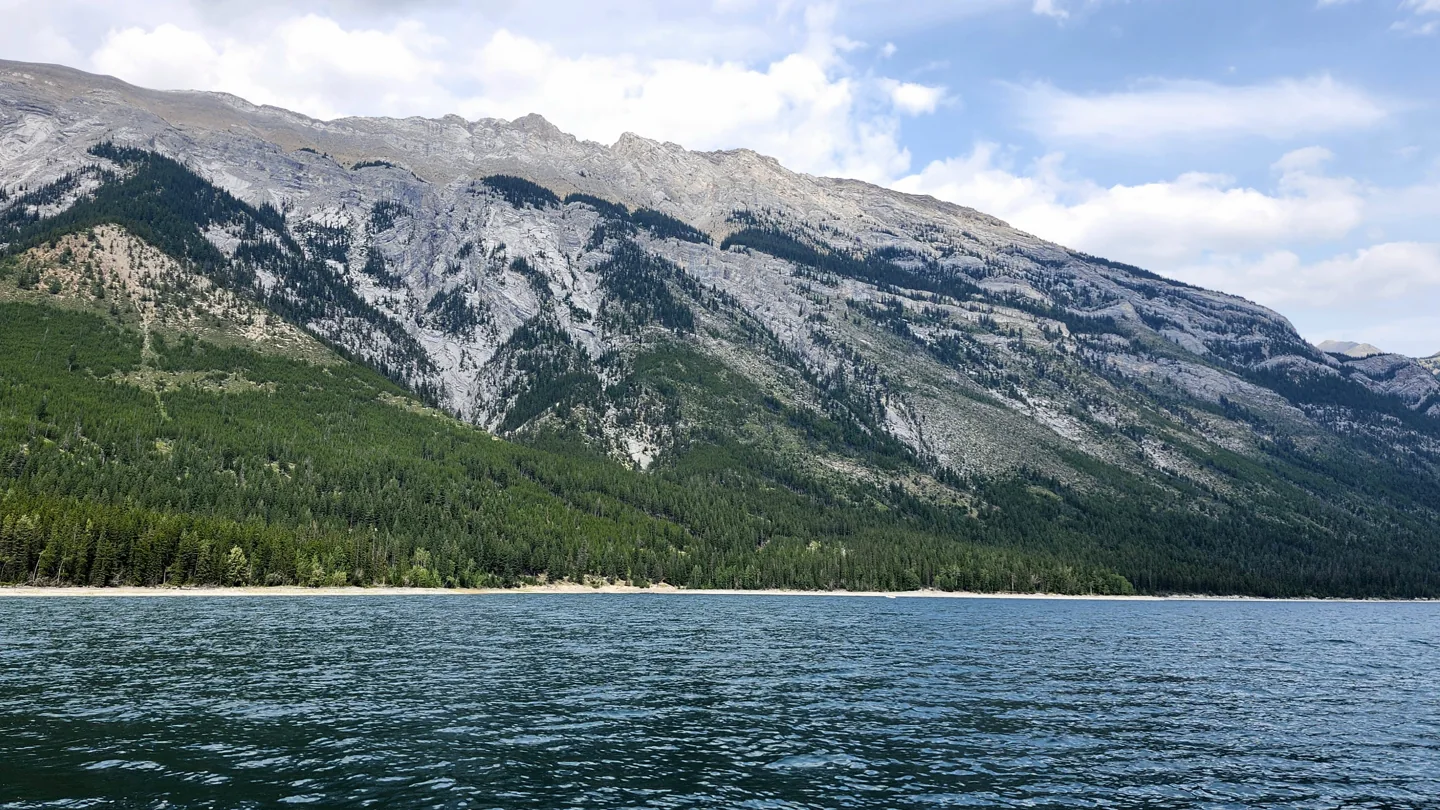
Start at the day-use area and walk towards the picnic tables along the shore. Turn back while the route still suits your group. Parks Canada describes a paved approach followed by a rolling natural trail, with more significant roots and rocks near the 1 km mark. Stewart Canyon bridge is a 1.6 km one-way option from the trailhead. Allow roughly an hour round trip for walking alone. Check current advisories and seasonal restrictions before continuing beyond the developed area or choosing a longer route.
A picnic and a look at the water work even if your group has different energy levels. Agree where you’ll regroup before splitting up, and set a return cutoff based on the bus. A cruise is a separate paid activity and may require its own check-in. Keep it optional unless getting out on the water is the reason you chose this lake. Travellers wanting the shoreline and a quiet lunch can get a complete visit from the day-use area.
See Lake Minnewanka from the water
Add the cruise when you have time for check-in and a confirmed ride back to town. Check the operating dates and whether your departure works with the seasonal bus.
See cruise dates on ViatorA half-day in town and a full day at the lakes
Half a day in Banff town
9:30 a.m. · Start at Central Park. Use the washrooms if needed, then take the Bow River Trail northwest. Turn at the Fenland Trail junction or earlier if you’re travelling with someone who wants a shorter walk. Allow 35–50 minutes for the round trip with stops. Swap in Bow Falls if the south-bank trail is open and the group is happy with stairs.
10:30 a.m. · Walk to The Whyte on Bear Street. Give the galleries about an hour. In the warm season, you can pick Banff Park Museum instead if its operating days line up and you want to stay beside Central Park. If both are closed, take the time for a café break and a shorter stretch of river when conditions suit.
11:45 a.m. · Sit down for lunch downtown. Bear Street or Banff Avenue keeps you near the places you’ve already visited. Decide over lunch if the weather is improving enough to add a second walk. If your day ends around 1 p.m., keep the rest of the time for getting to your ride or picking up luggage.
One full lake day from Banff
Morning · Go to Lake Louise Lakeshore. Book your preferred return first. Pick an outward departure that leaves a generous gap for your walk and the return boarding. For the Roam 8X, eat breakfast in town and leave time to be at the High School Transit Hub before departure. For a private or public shuttle, confirm the actual pickup. A shuttle ticket departing a park-and-ride still leaves you the journey to that lot.
Late morning · Walk beside the lake. Spend time at the front of the lake, then follow the shore past the initial viewpoint. Choose a short turnaround if you have a Moraine Lake connection. With a Lake Louise-only ticket, you can keep going as conditions allow. On a cold or wet day, shorten the walk and use the time for a warm break or an earlier confirmed return.
Midday · Eat before the second leg. Carry lunch if your shuttle runs on a tight schedule. Keep the second lake only if access and the return are already covered. Without that connection, choose a longer lakeshore wander and a slower return to town. Leave a buffer for the walk back to the pickup.
Afternoon · Be at the pickup before the deadline. Save the return confirmation and the provider’s pickup instructions on your phone before leaving Banff. If returning from Moraine Lake requires a transfer first, account for it before deciding how long you can spend at the lake.
On a two-day stay, move the lake day to the date that has both a workable booking and suitable weather. Use the other day for the river, a museum and, if the summit is clear, the gondola. This gives you a fallback that feels like a day in Banff even when clouds keep the summit out of sight.
Price the whole day before you book
Start with the ride, not the attraction. A walk with no admission charge still costs more than it looks if you pay for parking twice or need a separate lift back to town. Write down what’s included on each ticket: the outward ride, the connection between lakes, the return and any park admission. Compare the full party price. A seat-by-seat shuttle total for four travellers is a different decision from one person travelling alone.
If you’re coordinating two groups, agree on the last guaranteed ride and a meeting point before you split up. At Lake Louise, use the sign or stop name shown on your booking rather than agreeing to meet “by the lake.” Near Bow Falls, decide which part of the route you’ll walk together and where anyone who skips the stairs will turn back. That way a slower walker can still enjoy the outing without holding the rest of the group to the same pace.
Give yourself one moveable activity. Put the river walk or a café stop in that slot, not a timed ticket. If the bus runs late or the clouds lift halfway through the day, you can move the walk and keep the one booking that matters. For a late arrival, put your first paid reservation on the following morning, not immediately after check-in.
A winter tour or a day on the public bus?
The guided Lake Louise and Yoho outing takes about seven hours and includes lunch. It suits travellers who want to see both areas in a day with a guide. Choose the 8X if you mainly want time at the lakeshore at your own pace. See the Lake Louise and Yoho winter tour on Viator.
If you’d rather spend the morning on foot, check the guided Johnston Canyon icewalk on GetYourGuide. Confirm the meeting point, walking distance and whether traction gear is included.
Where to stay in Banff
Downtown Banff. Choose somewhere near Banff Avenue or Bear Street for Central Park, The Whyte and the town walks. If you’re taking the 8X, check the walk to Banff High School Transit Hub. A room closer to your departure can be worth more than a mountain view if you have children, winter gear or an early ticket.
Farther up Banff Avenue. Check the walk to dinner and the nearest bus stop. A cheaper room can work well if you’re happy to walk or ride into downtown. Compare the rate with the cost of parking if you have a car, and check where you’d get breakfast before an early departure.
Lake Louise. Stay here if the lake is the main reason for your trip and you want to avoid a return journey from Banff. A property in Lake Louise Village still leaves a separate trip to the waterfront. For river walks, museums and more dinner choices, base yourself in Banff and make Lake Louise an excursion.
Canmore. Consider it when you’re spending several days in the Bow Valley or want a larger room for your group. Roam’s regional service connects the towns. Account for that extra leg before an early excursion from Banff and after dinner before booking.
Use the morning route as a tiebreaker. For a short visit, pin your room and first departure on the same map before comparing prices. If you’re taking a private shuttle, don’t assume the pickup is at the public transit hub. For a rental car, check overnight parking, in-and-out access and whether parking is still available if you arrive after dinner. If you’re driving to the lake one day but spending the rest of the trip in town, compare a single hotel base against the time lost to another checkout and check-in.
Compare Banff town stays for your dates. Use the hotel map to check the walk to your departure stop, then compare totals including taxes, parking and cancellation. For a different base, compare stays in Canmore or check stays in Lake Louise.
Frequently asked questions about things to do in Banff
What should I do in Banff if I only have half a day?
Start at Central Park and do the Bow River Trail out-and-back. Add The Whyte if the galleries are open, or Bow Falls if you have enough time and want a longer walk. This keeps you close to downtown for food and your onward plans.
Can I visit Banff without a car?
Yes. The downtown river walks and museums are close together, and Roam serves places like the gondola and Lake Louise. Service to Lake Minnewanka is seasonal. Settle both legs and use the exact stop named on the ticket.
Can I see Lake Louise and Moraine Lake on the same day?
Yes, when your transport covers both lakes and the return. Public access to Moraine Lake is seasonal, and a standard bus ticket to Lake Louise does not include the connector. With a fixed return and no confirmed second ticket, make Lake Louise the whole outing.
What’s the best rain plan near downtown?
Start with The Whyte on Bear Street. Add Banff Park Museum in its operating season or choose Cave and Basin when it’s open and the longer approach works for your group. If rain eases, a short stretch of the Bow River gives you an outdoor option without a new booking.
Which things to do in Banff have no separate attraction ticket?
The Bow River and Bow Falls walks, the Lakeshore trail at Lake Louise and the day-use area at Lake Minnewanka have no separate attraction ticket. Applicable park entry, transport and parking still count toward the cost of the day.
What changes in winter?
Shorter daylight and changing footing make an early turnaround more useful. The Bow Falls clifftop section closes, Moraine Lake’s regular visitor shuttles are out of season, and the museum choices narrow. Build the day around an open indoor stop or a confirmed Lake Louise booking.
Keep planning your Banff visit
For your next step, compare Lake Louise parking and shuttle options or browse the Alberta guides if Banff is one stop on a longer trip.
How this guide was checked
Exploring In Canada used official trail descriptions, transit schedules, attraction information and booking terms. Seasonal details were reviewed on . The sample plans are planning estimates based on named routes and stops. Send a correction if a route or venue changes.
Official sources for live conditions, tickets and hours
Photo credits
- Ronin / Unsplash
- Harry Shum / Pexels
- JoshuaWoroniecki / Pixabay
- Laurent Bélanger / Wikimedia Commons · CC BY-SA 4.0 · WebP, displayed with a crop
- Ian Poellet / Wikimedia Commons · CC BY-SA 4.0 · WebP, displayed with a crop
- Diannaa / Wikimedia Commons · CC BY-SA 3.0 · WebP, displayed with a crop
- Callmend / Wikimedia Commons · CC BY-SA 4.0 · WebP, displayed with a crop
- Acroterion / Wikimedia Commons · CC BY-SA 4.0 · WebP, displayed with a crop
- AmazingWikiUser96 / Wikimedia Commons · CC BY-SA 4.0 · WebP, displayed with a crop
Keep planning your trip
 Explore Alberta